1000% Reviews

Latest Reviews

  • Blending Horror with Reality: A Reanimal Review

    Blending Horror with Reality: A Reanimal Review

    My partner and I slowly wander onto a train, enjoying a moment of reprieve after being chased relentlessly by a creature in a human skin suit. After taking a few minutes to settle down, we inch towards the front of the train and start the engines. For a moment, the train protests in a yearning screech, then it begrudgingly moves forward.

    <CRASH!!>

    The front window of the train smashes open and the grotesque, disjointed skin suit of a man clatters in. My partner and I start running, as fast as our little legs can take us. For a moment, it seems like we might not make it. The creature is gaining momentum fast, but at the last moment, both of us are able to hop out of an open door near the back of the train. The creature, unable to fit through the door, gives up, and begins looking for new ways to gave chase.

    Introduction

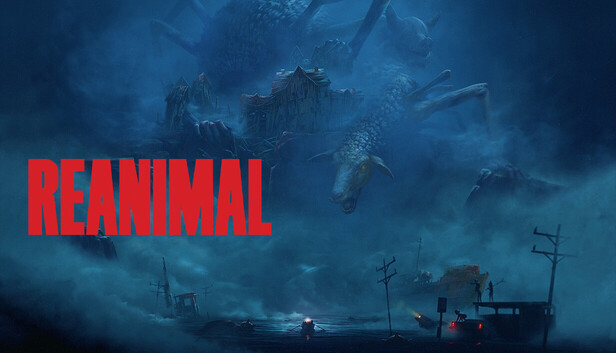
    Reanimal is an adrenaline-fueled horror game developed by Tarsier Studios, the same minds behind the popular, Little Nightmares series. Mirroring Little Nightmares, the game revolves around playing as children, lost amongst a world filled with grotesque creatures and adults, whom are strangely lanky and not quite human-like. Though short, Tarsier Studios succeeds in delivering a compact experience that offers very little downtimes and a lot of nightmares.

    Blending Horror with Environment Storytelling

    (SPOILERS AHEAD)

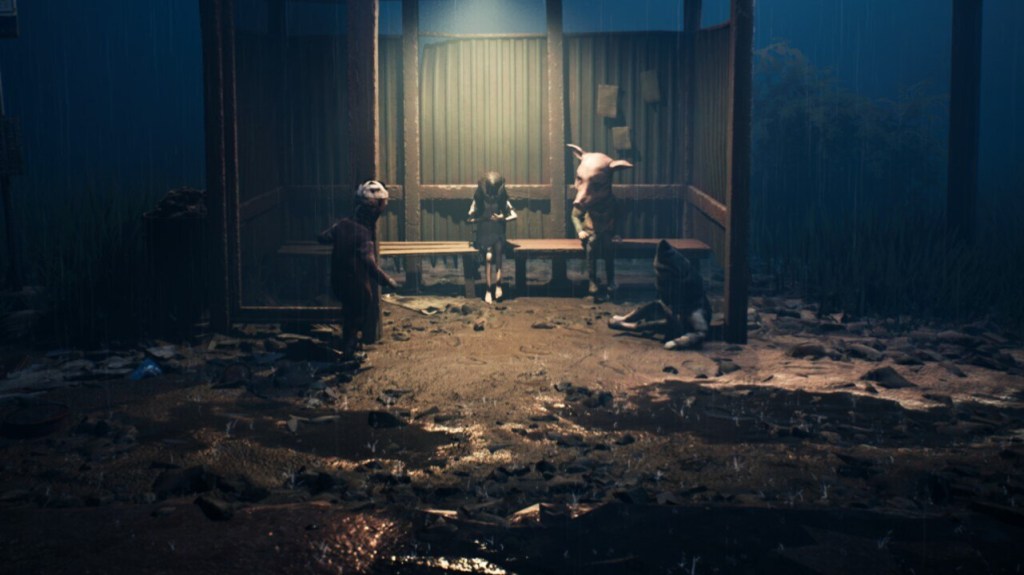
    First, let’s talk about the storytelling. Reanimal is a game that fully encompasses the saying “Show, don’t tell”. The story is never explicitly provided to the player and must be pieced together from each of the set pieces and monsters we encounter. The game begins on a boat, with one child, a boy, navigating. He soon comes across a girl floating in the water and helps her into the boat. The player soon lands the boats on a sandy shore and are introduced to the first set piece, the outskirts of a seemingly abandoned city. Within the outskirts roams a creature that seemingly wears human skin like a suit, driving an ice cream truck. Throughout the game, there are constant environmental references to real-world traumas. The creature in the skin suit is almost like a representation of adults taking advantage of children. Later set pieces also include a decrepit orphanage, where “dust children” are seemingly loyal to their brood mother, and a war-torn battlefield, where the men have given up and would rather take you down with them, than live another day. It genuinely feels like the world itself is in a depressed state, with entire cities either flooded, cracked from the earth itself, or ravaged by war.

    The constant presence of animals interacting within this environment adds a supernatural layer to the story and of course, gives the game it’s title. The way most of the animals are openly hostile to the children and will contort themselves just to snatch them hints at a problem with the children themselves. It’s almost as if they don’t belong in the world they inhabit. This is further driven home by the girl bringing the sheep into the world, an otherworldly animal that hungers and takes elements of what it consumes. It is almost as if the sheep is cleansing the horrors the world provides, which unfortunately, includes the children themselves.

    The Gameplay

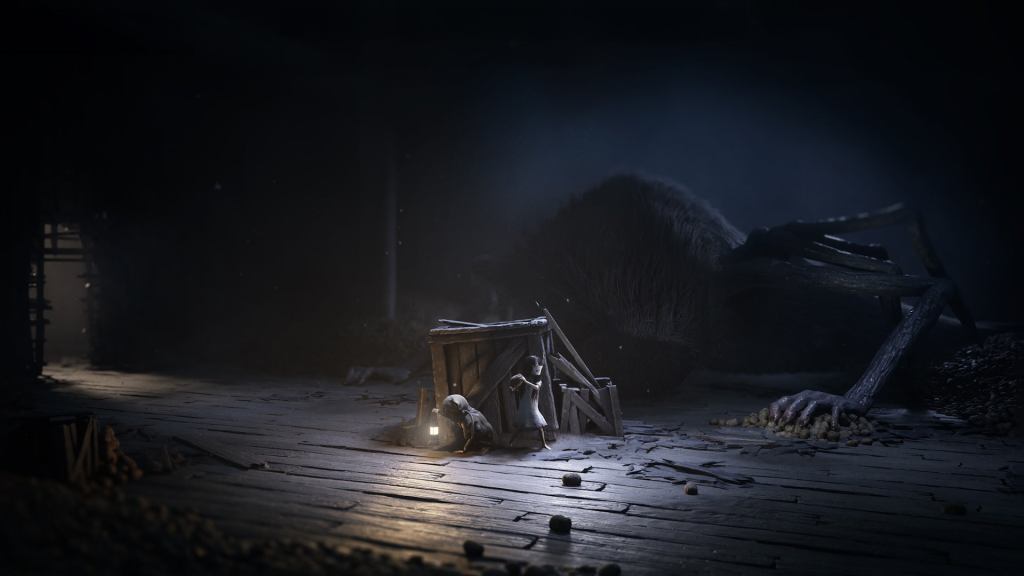
    Against giants, you are largely powerless. The majority of the gameplay involves running and hiding from creatures as well as moments of teamwork between both players. These moments of hiding together, huddled in a corner behind a box, are tense and exciting. The sense of fear and adrenaline carries the player forward. Both children do have melee weapons, and they work quite well against minor enemies like the dust children. Usually, one hit is enough to take them down. Still, against the major enemies, your melee weapons mean nothing.

    That, however, does not mean the children are entirely powerless. At the end of each set piece, there is almost always a boss fight where you take down that which hunts you. Despite the persistence of these giant creatures, they are not that bright and put themselves in a position that allows you to ultimately take them down. These segments are really fun and incredibly exhilarating, often sacrificing the horror built up earlier in favor of offering a moment of vengeance and thrills. Beating a boss and moving on to the next set piece offers a sense of relief that is indescribable. Between my partner and I, these were some of the best moments of the game.

    Conclusion

    Overall, would I recommend this game?

    Absolutely!

    Would I recommend this game given the $40 price tag (just for the standard edition) and the short game time?

    Since it allowed my partner and I a moment to enjoy a game together, yes, but for many others, I would recommend waiting for a sale.

    From start to finish with a good amount of exploration, it took my partner and I roughly 7 hours to beat the game. Admittedly, this is awfully short, but as I described before, it is a compact, non-stop horror adventure that hardly let’s up. Ultimately, it is up to you to decide if you think this game is worth it!

    What do you think? Please let me know in the comments below!

  • Sudden Strike 5 – An Initial Review: An RTS That Almost Delivers

    Sudden Strike 5 – An Initial Review: An RTS That Almost Delivers

    A single Allied soldier inches forward, scouting the town in front of him. As expected, there is a German presence in the town, with multiple men stationed in a building and a machine gun nest nearby. Carefully, a squad of rifleman are moved into position with a team of mortars not far behind. Within seconds, the town is on fire, with explosions ringing left and right from mortar fire. The machine gun nest is taken out with a direct mortar hit and the building is similarly demolished taking out the troops trapped within. The rifleman move in. The town is secure and safety in Allied hands.

    This is the Sudden Strike 5 experience.

    Sudden Strike 5 is a WWII RTS developed by Kite Games and published by Kalypso Media. For those who are unfamiliar, Sudden Strike is a series that emphasizes the “old-school” Blitzkrieg-style of RTS in which there is generally no base-building and who are forced to work with the units you are given. Sudden Strike 5 in particular, feels closer to the earlier Sudden Strike games (1-3) than it’s direct predecessor, Sudden Strike 4.

    Now, after finishing both of the first German and Allied scenarios (both of which focus on the Battle of Crete) multiple times, on multiple difficulties, and starting a few of the other missions, I can say that my overall opinion of the game is mixed, but optimistic.


    The Positives

    The environments between missions feel different and unique

    Starting with the positives…

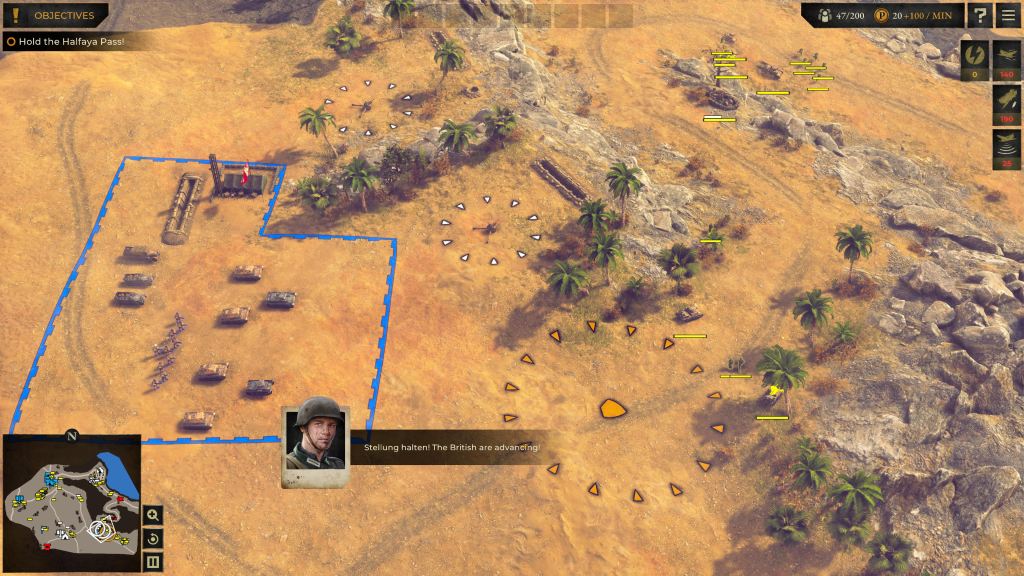
    One of the best aspects of the game is the large map sizes, with ample room for maneuverability. This creates a sense of replayability for each mission as you can try different avenues of attack. This is immediately evident in the first mission of the German campaign, where you are given a couple of options as to where to land your paratroopers for the initial attack. You even have the option of ignoring the marked points and landing your paratroopers where you want, albeit on a first playthrough, this is likely a death sentence for your men.

    Another aspect I really love is that armor actually feels useful without being overpowered. In both the Allied and German versions of the Battle of Crete, the Matilda I and II tanks feel powerful and are something to be feared. In the German version of the mission, British Matilda tanks play a vital role in holding back the player’s assaulting forces. As such, you are motivated to prioritize your limited number of heavy bombing runs on the British Matilda’s and are likely to also prioritize capturing anti-tank equipment and empty Matilda. If tanks aren’t available, that’s alright. Infantry is offered a variety of options to take them out such as mortars, anti-tank rifles, or anti-tank grenades. This will however, likely come at the cost of heavy casualties.

    On the other hand, the Allied version of the mission pits you against a largely infantry-based German force. As such, once you have access to the Matilda tanks, you can often roll them right up to the enemy lines and batter them without much consequence, assuming they don’t hammer your tanks with grenades or mortars.

    This leads me to one of the other aspects of the game I enjoy: supplies. Supplies in Sudden Strike 5 are essential. Your tanks and mortars cannot function without them. As such, you are constantly keeping track of how far you are rolling your tanks and how many shots your mortars are firing. If supplies are low, you will likely have to capture one of the optional supply outposts scattered around the map or find a supply truck (that has adequate supplies). Some missions will offer you limited supply drops, which helps with mid-assault refuels and resupply.

    Lastly, let’s talk a little bit about difficulty and the AI. I want to talk about both together as they are related. There are both positive and negative aspects about the AI but in this section, I’ll focus on the positives.

    AI in this game knows when you’ve captured a point or are assaulting a position, and will absolutely send reinforcements from other parts of the map if it feels a certain area is threatened and important. Depending on difficulty, the opposing forces will have more or less units scattered around the map. That means on hard difficulty, you can almost guarantee that any point you’ve captured will likely face a counterattack whereas on normal, it is still likely to happen, but not guaranteed. This has caught me off-guard at times. In multiple instances, I’ve assaulted one position, but suddenly face an infantry counterattack to my flanks, resulting in myself having to divert frontline rifle squads to ensure my artillery in the back are safe.

    P.S. Another quick mention of something I enjoy is the environments between missions. I love the distinct visual differences between the sandy deserts of North Africa, the rocky foothills of Crete, and the snowy plains of Russia.

    In summary, the positives are…

    • Large map sizes allowing for multiple approaches
    • The supply system
    • AI is reactive and will respond to your actions
    • Distinctive environments between mission

    The Negatives

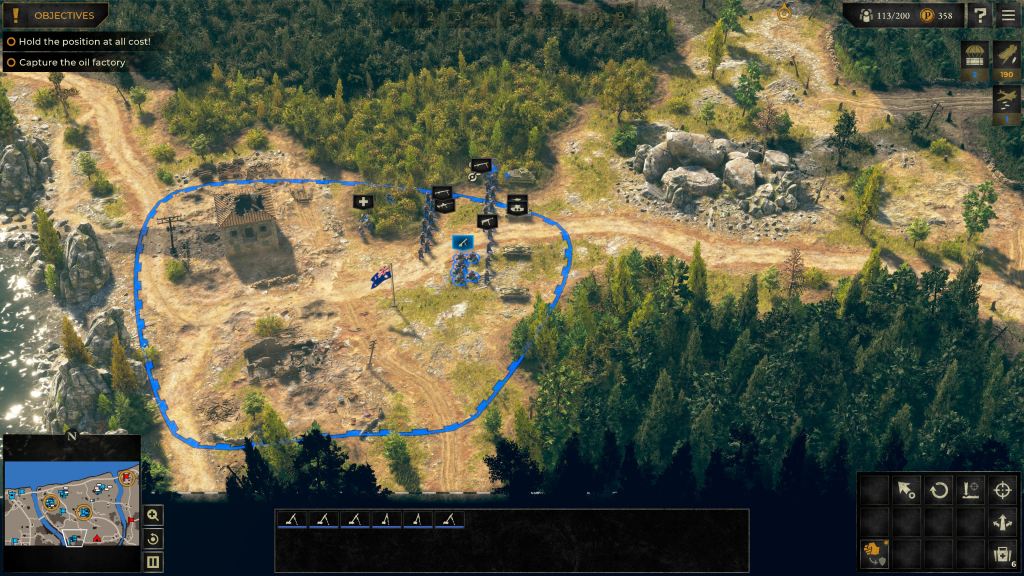
    Tanks + Rifle Squad in the front, Mortars and Medics in the back

    Now, with the positives covered, let’s talk a bit about the negative aspects of the game that I think hold it back.

    First, this game has a problem with repetition. Every mission I’ve played so far primarily involves capturing a series of points that are highlighted in blue. There are optional objectives that generally also involves capturing a series of points. Even defense missions ultimately become offensives and turn into another point capturing game. Now normally, this can actually be fine. The problem is that the current end-of-mission star-based rating system and formula for assault tactics compounds the repetitious feeling.

    In order to get three stars in any mission, you can’t just finish the main and optional objectives. You need to capture EVERY point on the map, essentially clearing out most of the opposing AI. This actually forces a puzzle-like sequence of approach, where while you may have many avenues of attack towards completing the main objectives, to get to three-stars on any mission, you are pigeonholed towards a more optimal route. For example, on my first playthrough of the first mission as the Allies, I took a suboptimal route, resulting in myself taking unnecessary fire while capturing optional objectives and finally having barely enough units to capture the main objectives. All that and I still ended up with two stars because I missed a few “optional” non-objective control points. From that first playthrough, I learned the most optimal route and immediately went for it on my second, resulting in minimal resistance and casualties, while also getting half the clear time and three stars on top of that.

    Now, again, having a puzzle-like sequence of attack towards capturing every single control point can be okay if there is some variation in those assaults. The problem is, there isn’t much variation. The strategy stays consistent for almost every assault on a control point. The recipe for success involves only two types of units: mortars and everything else. Medics are the only other essential utility. Tanks are a nice force multiplier but are not the most precious unit. The most precious are the mortars.

    For every control point, the sequence of attack almost always goes like this.

    1. Send 1-2 units (rifleman, submachine, machinegun – doesn’t matter, their differences are negligible) to scout an enemy control point
    2. Once the scouting units establish line-of-sight, move up a squad of infantry (except mortars and medics) to act as protective cannon fodder. If you have tanks, you can move them up as well.
    3. Now bring up your squad of mortars (the more the better). Almost no units can outmatch their range so you don’t have to worry too much about counterfire. Just protect their flanks.
    4. Now use the mortars to rain hell on every single opposing unit on the control point. The squad in front of the mortars (or tanks) will soak up any counterfire and act as a force multiplier.
    5. Once the control point is cleared, bring up the medics to heal up any casualties.
    6. Rinse and repeat

    Finally, let’s address the negative aspects of the AI, starting with the tactical bomber option. I don’t get the point of it. The tactical bomber is a limited action that calls in a dive bomber to fly around and occasionally bomb tanks and/or military emplacements within an area. The problem is, it often just flies around, not bombing anything, even if there is a clear target. Sometimes, it will look like it is bombing something only for the bombs to fly off-screen and just disappear. This makes the tactical bomber a relatively useless utility.

    Additionally, AI clipping and pathfinding in the game can be problematic. Sometimes, when a unit is downed, a medic will run to the unit, only to be unable to heal him because he’s too close to a rock or wall, essentially clipping through it. Other times, I’ve seen enemy squads stuck against a building wall, barely moving. While that’s advantageous for me, that’s still a noticeable bug.

    In summary, the negatives are…

    • Repetitive mission design
    • Mission rating system forces a certain approach
    • Repetitive tactics reflected in the repetitive mission design
    • AI clipping and pathfinding

    Conclusion

    Overall, this is still a game I will be playing. There is a certain comfort to repetition and I can see myself finishing all the mission in between other games. The core gameplay is fun and the diversity of environments between missions keeps an element of surprise. In fact, I’ll likely be back to leave a new review after beating all the missions.

    I hope this review was constructive and helps you decide if you’d like to give Sudden Strike 5 a shot. Please let me know in the comments!

  • The Beauty of Brandon Sanderson’s Cosmere

    The Beauty of Brandon Sanderson’s Cosmere

    If I had to describe Brandon Sanderson’s works, it would be like frequenting your local five-star escape room business, where every room offers you a distinctive experience, complete with a unique story, theme, and puzzles, yet you always get the sense that the same creative mind is behind every curtain.

    Now imagine all those rooms have puzzles and hidden story elements that subtly hint towards some sort of connected continuity with all the other rooms, despite their vastly different themes. This is the Cosmere.

    So, for the uninitiated, what is the Cosmere?

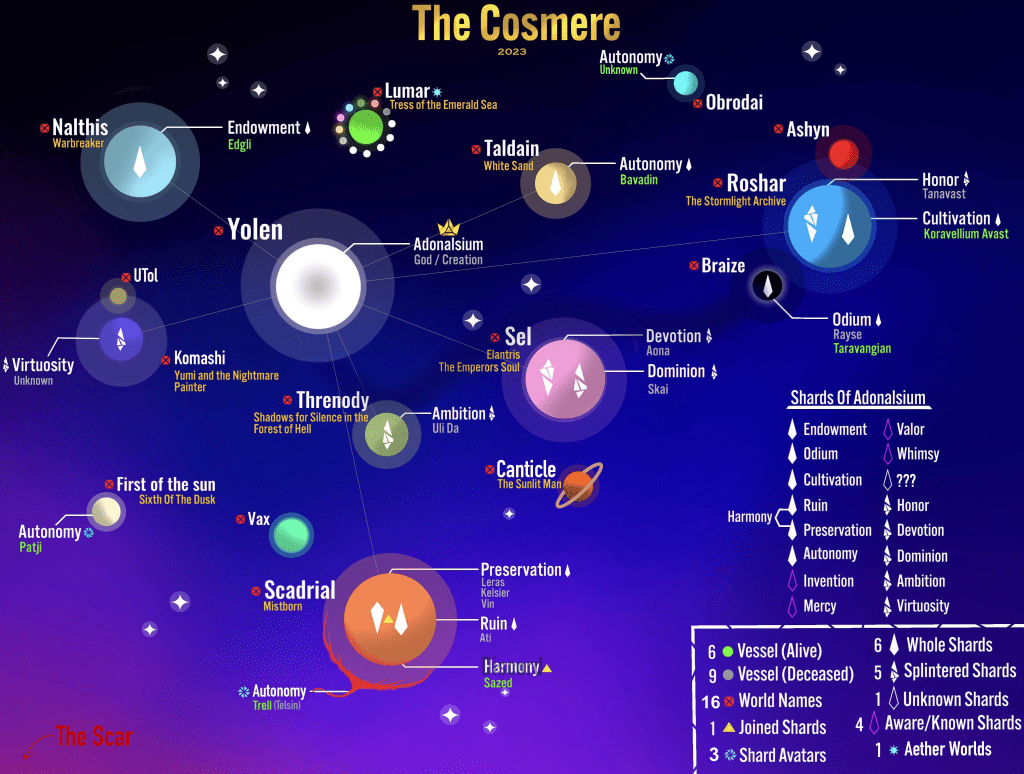
    Well, it’s a universe, quite literally. Well, more specifically, it’s a universe populated by dozens of planets and solar systems. Many of these planets are barren, however, a select number of them have a “god” (or multiple “gods”) tied to them. These “gods” were once part of a single god, however, a group of sixteen people killed and shattered the god into pieces. Each of them got a “shard” which represents a personality trait of the original god. These “shards” made these people gods in their own right, but it also slowly shifted their personalities to the shard that they held. They would soon disperse to different planets, or create their own new planets, dictating the systems of the planet, creating life, and investing themselves in the very ecosystems of the planet (also known as investiture).

    Each Cosmere series/novel takes place on a different planet. Like most escape room businesses, the stories are not directly connected. As such, the reader can start at any series or one-off novel within the Cosmere, and not feel lost.

    Posted by Galdon13579 on Reddit

    Within the Cosmere, there are three planes of existence: the physical realm, the cognitive realm, and the spiritual realm. Without getting too into the weeds, the distance from one planet to another is immeasurable in the physical realm (at least before technology progresses into space), however, in the cognitive realm, one could simply walk between planets. The only problem? It’s not easy to get into the cognitive realm as a human. As such, each book within the Cosmere will have a few references to other worlds. There may also be a few characters that reoccur between books or may seem out of place. Thankfully, the first-time reader is not expected to understand these references. They don’t need to be understood. In fact, oftentimes, they aren’t meant to be understood in a first read-through.

    That is the beauty of the Cosmere. Sanderson writes his novels in such a way that all his systems intricately connect deep enough to allow for analytical-minded folks to chew on, while also providing an engaging story for the casual reader. Sanderson does this while also giving himself enough flexibility to create new stories, worlds, and magic systems without breaking the continuity of what has been built before.

    My Experience

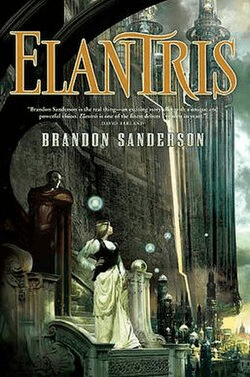
    I first entered the world of Sanderson through his first Cosmere novel, Elantris. Many people consider Elantris one of the author’s weaker entries given it was one of his earlier works, however for me, it couldn’t be more of a delightful treat to get me back into the world of books. At the time, having not read a novel in a while, Elantris was my attempt to find something to draw me back into books. Consider it a success.

    (Warning: Minor Spoilers Ahead)

    Elantris is told from three perspectives. First is Prince Raoden, a man who is next in line for the throne of Arelon and is to marry soon. However, one day, he wakes up to find himself covered in dark splotches and looking disfigured. He had been taken by the Shaod. Once, those who had been taken by the Shaod became glowing figures with incredible abilities. They would move to the glowing city of Elantris to be with others who had the same abilities. However, at some point before the start of the book, disaster struck the Elantrians when their skin turned to dark splotches and their city darkened and began to crumble. Now, those taken by the Shaod are covered with the splotches and locked in the disgraced city of Elantris. Raoden is forced to learn to survive within the city and find a way out.

    The second is Princess Sarene, the woman who was to wed Prince Raoden. Upon arriving in Arelon, she is immediately told she is a widow and that Raoden is dead. She soon becomes suspicious of the circumstances behind his “death” and is determined to find out the truth.

    Finally, we have Hrathen, a high priest who follows Shu-Dereth and is trying to peacefully (but forcefully) convert the country of Arelon to the religion while avoiding religious conflict.

    Throughout the book, the fates of each of the characters increasingly intertwine as the stakes grow higher and higher for what will become of Arelon.

    The magic system within this world (the planet, Sel) is called the AonDor. It involves drawing “Aon” symbols using energy from the “Dor”. These symbols give unique abilities like creating objects, healing, and much more. Most of the magic systems within the Cosmere are based around some form of spiritual “investiture” from the god associated with the world.

    There is also generally some form of religion within most of Sanderson’s worlds. Elantris is no exception. Within the planet of Sel, there are two major religions: Shu-Dereth and Shu-Korath, both of which derive from Shu-Keseg. There is also a more cult-like offshoot called the Jeskeri Mysteries.

    Even in his earlier novels, Sanderson is able to masterfully weave religion in such a way that it does not feel out of place or preachy and is often instrumental in the plot of his stories.

    Personally, I really enjoy the way Sanderson intertwines his character-centric storytelling with the world itself. In many novels, the author will either focus on the worldbuilding at the cost of the characters themselves, or they will focus too much on the characters, only using the world as a backdrop/playground for the characters, making the world almost immutable.

    Sanderson writes in such a way that the characters take center-stage, where their actions leave a mark on the world while still allowing time for the world itself to breathe. There is a sense that the world is not just a stage for the characters, but an active force that shapes them just as much as they shape it. In many of Sanderson’s stories, there is a clear layer of interplay between the world and the characters.

    (Warning: MAJOR Spoilers Ahead)

    In Elantris, we discover that the Shaod became a curse because an earthquake reshaped the continent’s landscape. Since the symbols of the AonDor are drawn to mirror the surrounding geography, this shift broke the magic system entirely. The world itself changed, and the characters suffered the consequences. In this way, Raoden’s journey towards discovering and fixing this directly links him to the world, and by extension, the magic systems that dictate it. This really emphasizes the worldbuilding Sanderson has done while keeping the focus on Raoden.

    This interplay between the worlds becomes even more apparent in some of the other series within the Cosmere. In both Sanderson’s first Mistborn Trilogy and the Stormlight Archives, we see worlds that are literally crumbling around the protagonists as they do what they can to influence and change the fates of these worlds.

    By tying the actions of the characters to their worlds, when a character does appear in another series, it feels like they are bringing a piece of their world to another world. In fact, this is often how the reader can tell there is a character out of place. It isn’t through name dropping (unless it’s Hoid…) but rather through subtle references of dialogue or physics that seem out of place for the series.

    Conclusion

    Like the escape room, Elantris is only one experience of many. If you’re looking for a story epic in scope, the Stormlight Archives is the way to go. If you’re looking for a more contained, but high stakes story, Mistborn is the way. Each of these series is their own unique experiences, but in one way or another, they are all connected, whether through the Cosmere or by Sanderson’s unique storytelling. All in all, I encourage you to step into a room and experience it for yourself!

  • Book Review: Catching Fire

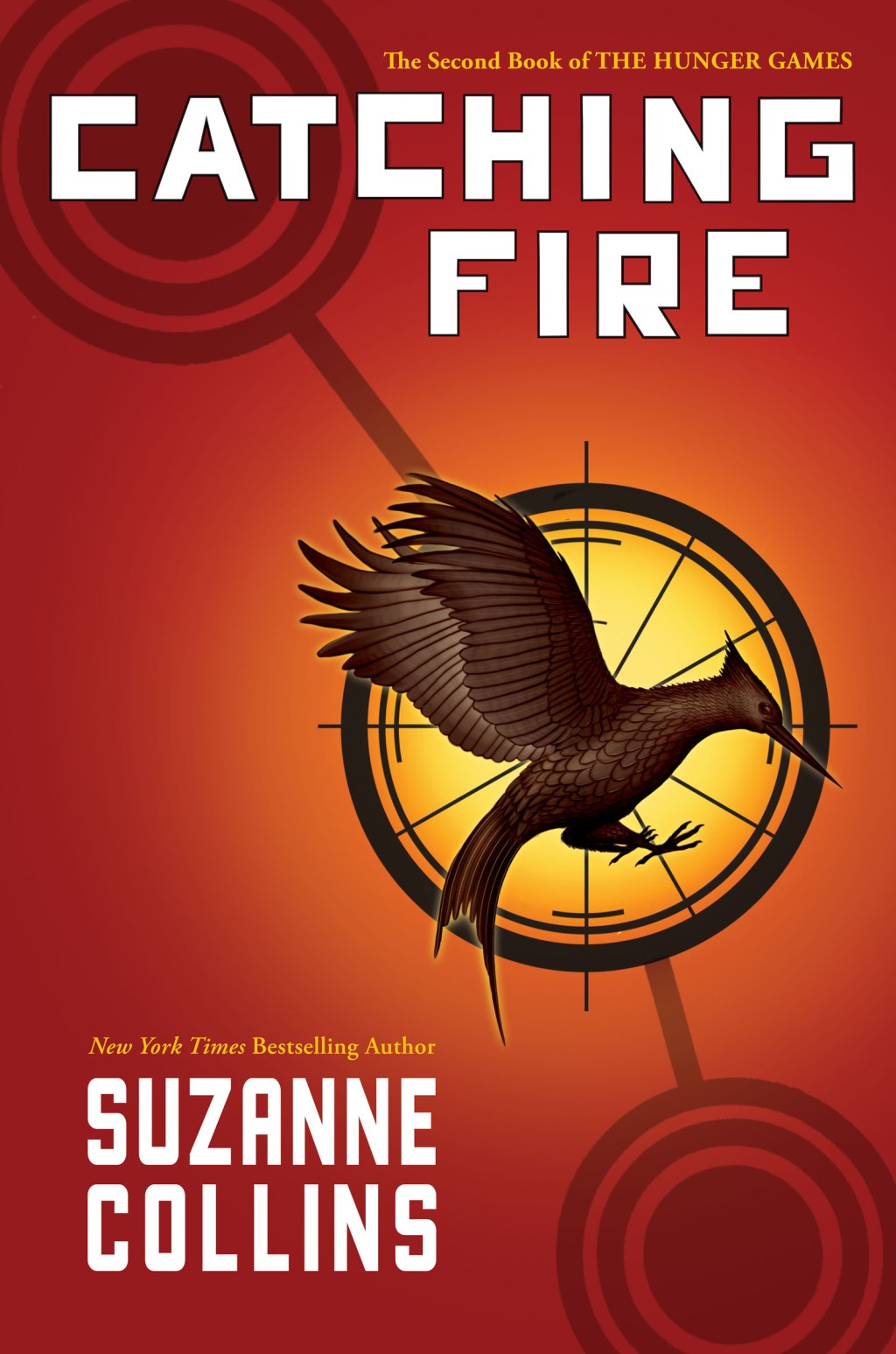
    Book Review: Catching Fire

    After finishing the first Hunger Games, it took me a little bit to get into the second book, Catching Fire. In between these books, I’ve been starting the Riyria Chronicles as well as wrapping up Brandon Sanderson’s Mistborn Era 1 series. It was in this hiatus that I came to realize my favorite books are those that are grander in scope, with a lot of moving parts. Perhaps that’s why my favorite book/movie series of all time is the Lord of the Rings. I’m always open to more recommendations along those lines! Anyways, with the Hunger Games being a more singular character focused story of survival, I wanted a change of pace after finishing the first book, so I took a brief hiatus before getting started on Catching Fire.

    However, upon starting Catching Fire, I was pleasantly surprised. Catching Fire is a book that takes the opportunity to really expand the scope of the world of Panem, giving a much greater picture of what is going on. Katniss’ actions in the first book have now spiraled beyond her, resulting in a much more dynamic world where events don’t necessarily revolve around what the main character does. In fact, one of the primary transformations in the book that will likely also carry into the third book, Mockingjay, is Katniss’ acceptance that she has started something that is out of her control, and only with her acceptance of this, can she take back control and lead what she has started.

    As the book develops, we hear about rebellions throughout Panem, many of which Katniss never even witnesses, only hears about. We also get our first true introduction to President Snow, a seemly calm, but threatening figure, who wants to be seen as having a grasp the situation developing in Panem. But as the rebellion continues, it becomes clear even he has lost control of the population, forcing him to retaliate. It is this invisible power struggle between Katniss and President Snow that defines the majority of the book. With the next Hunger Games considered a “Quarter Quell”, Snow orchestrates a game where previous winners from each district must compete. This means sending Katniss and Peeta back into the arena, with a clear intention of killing them off, essentially cutting out the figureheads of the rebellion.

    Throughout the book, and even to the end, Katniss feels a lack of control. She seems to only see people at a surface level, resulting in confusion that is evident to the reader. As she is tossed back in the arena, she wonders why people are helping her survive, what does those outside the arena think of her, or in general, what is going on. This constant stream of confusion as to what is happening around her allows the romance established in the first book to take a backseat, with Katniss forced to protect both Gale and Peeta, not out of love, but necessity and to keep her sources of stability alive.

    This book in general, feels like it is a buildup for the third book, where Katniss likely will have to accept her role in the rebellion and take charge. The invisible showdown between President and Katniss will likely come to a head with the stakes higher than ever. This is a book that got me excited to start Mockingjay and I look forward to seeing how the story concludes.

  • Higurashi – When They Cry: Ch.1 Onikakushi Review

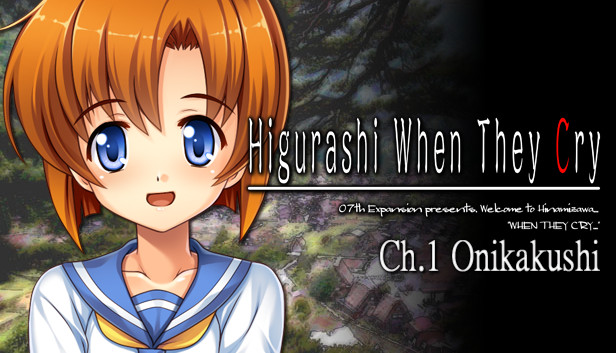
    Higurashi – When They Cry: Ch.1 Onikakushi Review

    Higurashi: When They Cry is a horror visual novel written and produced by 07th Expansion. The full game is split into eight chapters, that are each about 10 hours of gameplay. In this review, I’ll be focusing on Chapter 1: Onikakushi with 100% achievements (which are all easy to get).

    Warning: Spoilers Ahead

    Chapter 1 follows the journey of Keichii, a student from Tokyo who moves to a quiet village called Hinamizawa. At first, the game follows a typical slice-of-life formula, introducing his classmates, all girls, like a typical romance visual novel. Early on, Keichii meets Rena, Satoko, Mion, and Rika. Satoko and Rika are the kids that enjoy messing with the main character. Rena is introduced as a shy, but cute and bubbly girl. Mion is shown as confident and the leader of the pack. All in all, if Higurashi didn’t already have a reputation as a horror visual novel, one could expect Rena or Mion to eventually be a love interest to Keichii.

    In either case, the game takes its time to develop an emotional bond between Keichii and the other characters around him. For those who have previously read slice-of-life VNs, this is familiar territory, but for those looking for a scare, this can feel quite slow. I personally like the amount of time spent in slice-of-life territory. It puts the reader at ease and works to deepen the feelings of unease when the first horror elements are introduced. The first hints of these horror elements arrive when side characters are introduced. Tomitake, the cameraman from Tokyo, is the first to bring up the darker history of Hinamizawa, and what kicks off Keichii’s curiosity into the town’s past. Following the Watanagashi festival, his curiosity is only deepened and turned to fear with the introduction of Ooishi, a cop from Okinomiya. What both Tomitake and Ooishi have in common is their common identity as outsiders, at least in the villagers eyes. Neither are from Hinamizawa, therefore, neither should be there. At least, that is the vibe that is given after the story takes a dark turn….

    I love how the story takes this turn. The common identity between the side characters forces Keichii to reflect on his own identity. He, himself is from Tokyo,therefore he is also an outsider, regardless of whatever acceptance he initially felt. Keichii’s initial experience in Hinamizawa feels like an illusion that was carefully crafted by the village, to relax the prey before the town strikes. As outsiders slowly break Keichii’s illusions, the town begins to look more hideous. As the town itself realizes the gig is up, it turns on Keichii as well.

    Here is where the mystery truly begins. Characters we, along with Keichii have developed a bond with, suddenly began to act strange. Their personalities feel like a switch, going between what we already know and a hidden, murderous side. While Rena and Mion’s personalities initially feels natural, they’re sudden turn toward murderous intent makes the reader seriously question what is happening. Are they possessed? Do they just have some personality disorder that is triggered at specific points? Are they just natural killers pretending to be nice to lure in their prey? The tension is palpable and as the town turns increasely hostile towards Keichii, the reader feel the same fear and confusion as he does. By the time Keichii meets his fate, it almost feels inevitable, with the tension at an all time high. Yet, the reader is only left with more questions than answers. Why is the town like this? Is it supernatural? Is Keichii truly dead?

    Honestly, I can’t wait to pick up the next chapter and see where it goes. I look forward to discovering more about Hinamizawa and what truly drives the town.

    (Achievements Side Note): While you will naturally get most of the achievements just by reading through the story, there are two achievements you might have to go out of the way for. “Detective-Onikakushi” requires that you read all tips that are usually introduced between sub-chapters. If you miss any, make sure to read it after reading the main story. “Onikakushi Party” can be unlocked by attending the “after-party” after reading the main story. Following the main story, an “All-Cast review session” button will appear. After reading through it, you should get the achievement. I highly recommend reading it as it acknowledges many of the readers potential theories after Chapter 1 and proposes some others we might have missed!

    No comments to show.

    Leave a comment

  • Book Review: The Hunger Games

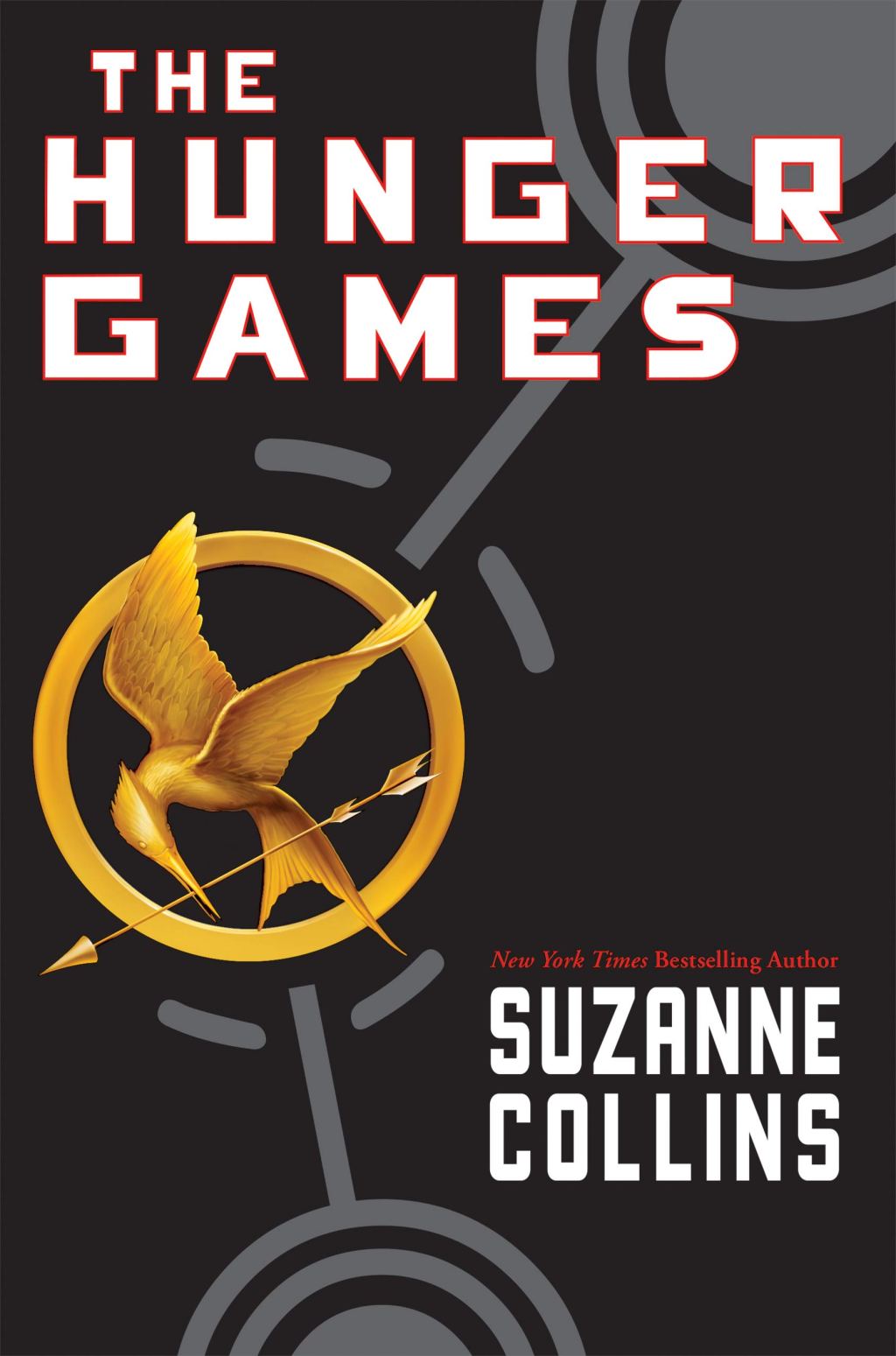
    Book Review: The Hunger Games

    Recently, I was reintroduced to YA fiction with a recommendation to read the Hunger Games by Suzanne Collins. Now, this was a book I remember reading years ago, likely around the time people begin hyping up the first movie, so around 2012. In light of the new book of the prequel series, “Sunrise on the Reaping”, releasing on March 18 of this year, I followed through with the recommendation as now is as good of a time as ever to get back into the series. So, let’s talk about it!

    The story of the Hunger Games is set in the land of Panem, an alt-history dystopian landscape of what was once the American continent. In this version of history, the North American continent was devastated by natural disasters and wars, resulting in the rise of the “Capitol” as well as 13 separate districts specialized in specific industries. The capitol ruled Panem with an iron fist resulting in one of the district rebelling, district 13. The rebellion led by district 13 resulted in other districts rebelling, leading to what’s known as the “Dark Days”. The Capitol would ultimately win out, restoring order, while also wiping out district 13. They would also establish the Hunger Games, where one boy and one girl are selected as tribute to fight to the death in an arena as a reminder of the Capitol’s power. This becomes the status quo of Panem leading us to where the book starts.

    The story of the Hunger Games is told from the perspective of Katniss Everdeen, a 16 year old girl chosen as tribute for district 12 in the 74th Hunger Games. The tone and style of writing is simplistic and straight to the point. This isn’t necessarily a choice to fit the YA category, but rather, reflective of the narrator, Katniss, and her personality. Within the first couple of chapters, the reader is already given an idea of why Katniss is the way she is. With her father dying while she was young and left to take care of her little sister, Prim, without the help of her despondent mother, survival is at the core of her personality. Early on, everything she does revolves around survival, with little time for dilly dallying. This is reflected in the straightforward writing, which in my opinion, does a good job of moving the story along at a pace that doesn’t feel like it’s dragging on for the sake of it. There are no deep internal dialogues or intricate prose. The narration early on gives us an idea of Katniss’ thoughts and what comes next. Background is provided only where it’s needed and similarly, does not overstay it’s welcome.

    Something that did catch my attention early on was the fair amount of adult themes that surprised me for a YA fiction novel… though to be fair, based off my recollection of the YA fiction I did read in the past, many probably also had strong adult themes, they just didn’t quite stick with me.

    Here, in the Hunger Games, some themes are incredibly blatant. Katniss is a walking representation of the loss of innocence, and her sister, Prim, as well as Peeta – the other tribute of district 12 – are meant to contrast that loss of innocence. In fact, their innocence is what drives Katniss’ character development throughout the novel. This is further driven home by the character, Rue, who Collins seemed to want to develop further, but instead, killed her off before she could get the spotlight in favor of further driving home the contrasts between Katniss’ lack of innocence compared to those around her. Story wise, it is used as a plot device to give Katniss another advantage, Thresh. Is this a good thing? In my opinion, it misses the mark. Rue’s lack of development makes her death unemotional and makes it hard to emphasize with how Katniss must feel, as well as finding Thresh as a later ally not really rewarding.

    Now, I want to talk a bit about the romance in the novel. Overall, the romance in the Hunger Games feels quite natural and isn’t overbearing. It is clear that a love triangle of sorts is being setup between Gale and Peeta vying for Katniss. Certainly, at least in the first book, Peeta is the focus, with Katniss’ confusion playing a fake love story conflicting with her true emotions leaving Peeta, as well as the reader, equally confused as to how she ultimately feels. Again, Collins succeeds in making the inner conflict feel natural. After Peeta’s initial confession before the Hunger Games, Katniss realizes she’s going to have to play a narrative. After faking something long enough, it can become hard to separate what’s real and what’s fake. Clearly, Katniss has to deal with this distinction, but ultimately, is left to be resolved in the next books in the series.

    Overall, the Hunger Games starts off strong, developing Katniss as a character the audience can reliably root for. The world of Panem is also introduced, grand in scope, but localized in the story so that a narrative can be told. I look forward to see what happens next in Panem.

    No comments to show.

    Leave a comment