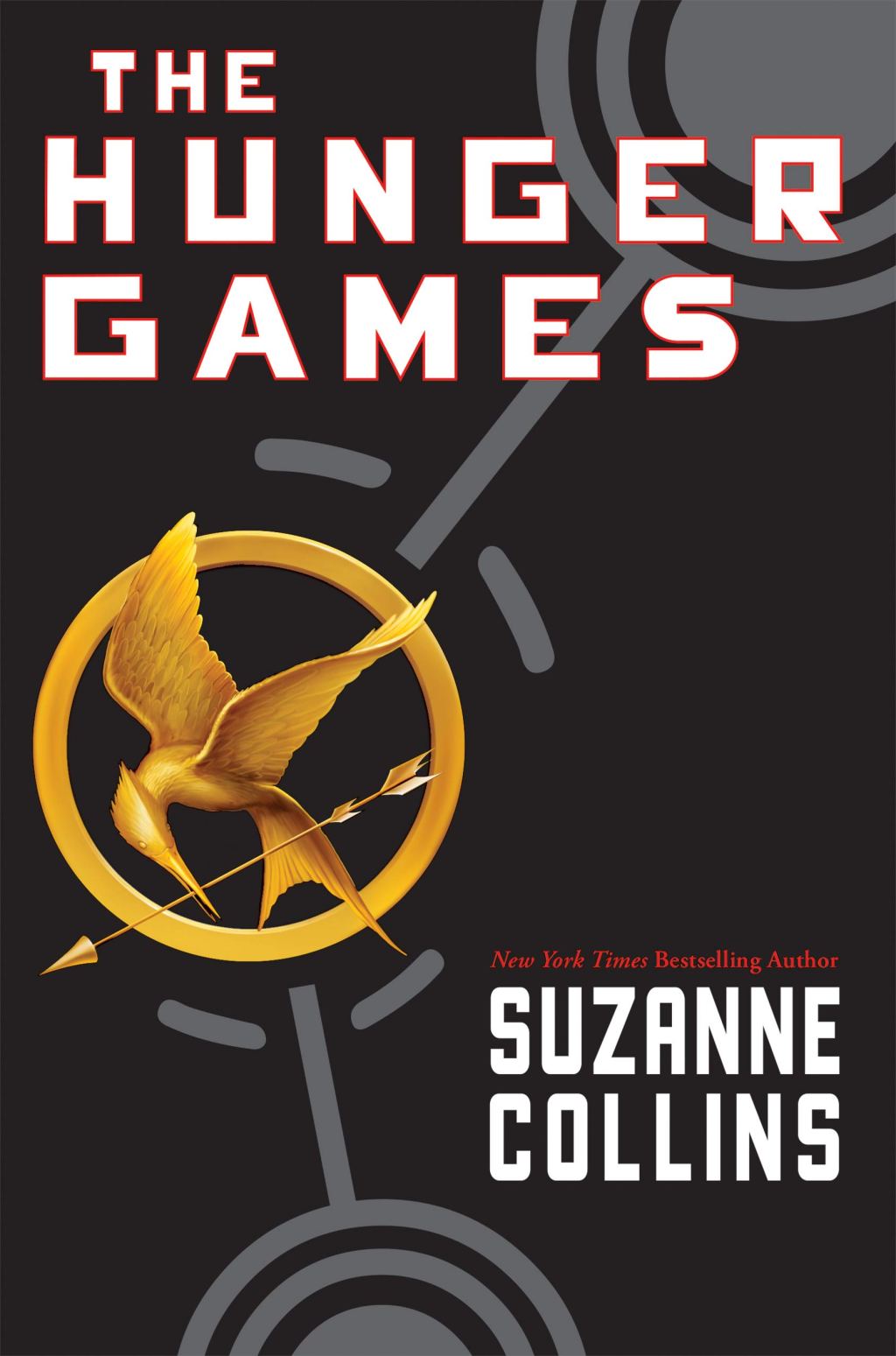
Recently, I was reintroduced to YA fiction with a recommendation to read the Hunger Games by Suzanne Collins. Now, this was a book I remember reading years ago, likely around the time people begin hyping up the first movie, so around 2012. In light of the new book of the prequel series, “Sunrise on the Reaping”, releasing on March 18 of this year, I followed through with the recommendation as now is as good of a time as ever to get back into the series. So, let’s talk about it!
The story of the Hunger Games is set in the land of Panem, an alt-history dystopian landscape of what was once the American continent. In this version of history, the North American continent was devastated by natural disasters and wars, resulting in the rise of the “Capitol” as well as 13 separate districts specialized in specific industries. The capitol ruled Panem with an iron fist resulting in one of the district rebelling, district 13. The rebellion led by district 13 resulted in other districts rebelling, leading to what’s known as the “Dark Days”. The Capitol would ultimately win out, restoring order, while also wiping out district 13. They would also establish the Hunger Games, where one boy and one girl are selected as tribute to fight to the death in an arena as a reminder of the Capitol’s power. This becomes the status quo of Panem leading us to where the book starts.
The story of the Hunger Games is told from the perspective of Katniss Everdeen, a 16 year old girl chosen as tribute for district 12 in the 74th Hunger Games. The tone and style of writing is simplistic and straight to the point. This isn’t necessarily a choice to fit the YA category, but rather, reflective of the narrator, Katniss, and her personality. Within the first couple of chapters, the reader is already given an idea of why Katniss is the way she is. With her father dying while she was young and left to take care of her little sister, Prim, without the help of her despondent mother, survival is at the core of her personality. Early on, everything she does revolves around survival, with little time for dilly dallying. This is reflected in the straightforward writing, which in my opinion, does a good job of moving the story along at a pace that doesn’t feel like it’s dragging on for the sake of it. There are no deep internal dialogues or intricate prose. The narration early on gives us an idea of Katniss’ thoughts and what comes next. Background is provided only where it’s needed and similarly, does not overstay it’s welcome.
Something that did catch my attention early on was the fair amount of adult themes that surprised me for a YA fiction novel… though to be fair, based off my recollection of the YA fiction I did read in the past, many probably also had strong adult themes, they just didn’t quite stick with me.
Here, in the Hunger Games, some themes are incredibly blatant. Katniss is a walking representation of the loss of innocence, and her sister, Prim, as well as Peeta – the other tribute of district 12 – are meant to contrast that loss of innocence. In fact, their innocence is what drives Katniss’ character development throughout the novel. This is further driven home by the character, Rue, who Collins seemed to want to develop further, but instead, killed her off before she could get the spotlight in favor of further driving home the contrasts between Katniss’ lack of innocence compared to those around her. Story wise, it is used as a plot device to give Katniss another advantage, Thresh. Is this a good thing? In my opinion, it misses the mark. Rue’s lack of development makes her death unemotional and makes it hard to emphasize with how Katniss must feel, as well as finding Thresh as a later ally not really rewarding.
Now, I want to talk a bit about the romance in the novel. Overall, the romance in the Hunger Games feels quite natural and isn’t overbearing. It is clear that a love triangle of sorts is being setup between Gale and Peeta vying for Katniss. Certainly, at least in the first book, Peeta is the focus, with Katniss’ confusion playing a fake love story conflicting with her true emotions leaving Peeta, as well as the reader, equally confused as to how she ultimately feels. Again, Collins succeeds in making the inner conflict feel natural. After Peeta’s initial confession before the Hunger Games, Katniss realizes she’s going to have to play a narrative. After faking something long enough, it can become hard to separate what’s real and what’s fake. Clearly, Katniss has to deal with this distinction, but ultimately, is left to be resolved in the next books in the series.
Overall, the Hunger Games starts off strong, developing Katniss as a character the audience can reliably root for. The world of Panem is also introduced, grand in scope, but localized in the story so that a narrative can be told. I look forward to see what happens next in Panem.


Leave a Reply