1000% Reviews

Category: Game Reviews

  • A Journey Through Elder Scrolls Online: Khenarthi’s Roost

    A Journey Through Elder Scrolls Online: Khenarthi’s Roost

    Ahhhhh! Khenarthi’s Roost my old friend…

    If there’s one starting zone in Elder Scrolls Online that I could claim total familiarity with, it’s this one for the Aldmeri Dominion. Why?

    Because of my ADHD fueled on and off relationship with ESO as a whole. For every time I’ve tried getting back into the game and quitting again, I always tell myself, “This time I’ll finish the Aldmeri Dominion campaign” over and over again to ad infinitum only for my brain to one day switch focus completely into the new fixation. Now every time I do this, I always start a new character, dreaming to finally take everything in from start to finish. It never happens, but in the process, I’ve become intimately familiar with the first region for the AD, Khenarthi’s Roost.

    Now, onto Khenarthi’s Roost. How do I feel about Khenarthi’s Roost?


    The New Player Experience
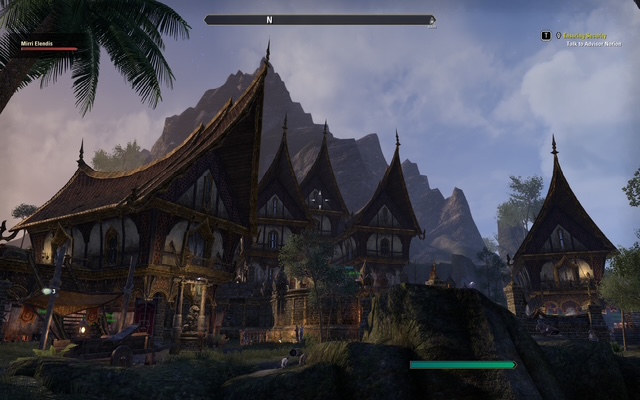
    Mistral, Port City of Khenarthi’s Roost

    For a new player, Khenarthi’s Roost is the perfect place to experience a swashbuckling mix of tropical life, shipwrecks, pirates, the undead, and dead-end diplomacy, alongside a touch of Khajiiti hospitality. It is essentially a sampler to the wider world of Tamriel, allowing players to ease into their role in the world, learn the systems, decide what they want out of combat, and began following the story.

    So what of the story? How is it?
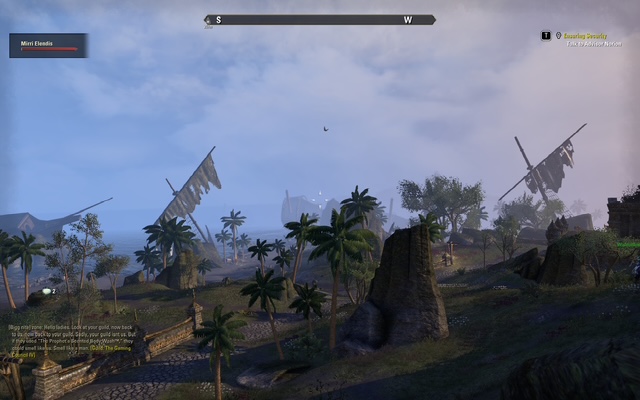
    Dominion Shipwrecks caused by Maormer storms

    (Spoilers Ahead)

    Well, Khenarthi’s Roost keeps the scope small and localized at first. The dominion is attempting to establish an alliance with the populace of Khenarthi’s Roost but there is friction between the Dominion, the native Khajiit and the Maormer sea elves. While the native Khajiit are somewhat receptive to working with the Dominion, the Maormer are much less inclined, which results in Maormer assassinating the Dominion diplomat, the Silvenar Edhelorn. Alongside this, they began wrecking Dominion ships off the coast by summoning storms which also harms the native population of the island. The player’s goal is to uncover the Maormer plot, stop the storms, and along the way, help the Dominion secure the alliance with the island and stop them from doing anything stupid, like reviving ancient undead beings. Classic.

    Overall, the story is fairly self-contained, with the player getting to meet their first memorable re-occurring NPCs like Razum-dar and acclimate to traversing around the island, finding story bits and side quests. I personally felt this was a great introduction as it wasn’t too overwhelming, while also easing us into the idea of being an agent for the Dominion. I like that as the player, we are exposed to the natural proclivities of the island’s inhabitants, with the Khajiit’s tendency for a little thievery here and there, as well a taste of the high elves’ views on racial superiority (way more to come in Auridon here). The island’s questline ends by offering the player the opportunity to travel to the next area, Auridon, a much larger area, with much more content, a more complex storyline, and more difficult challenges.

    Easing into the Gameplay
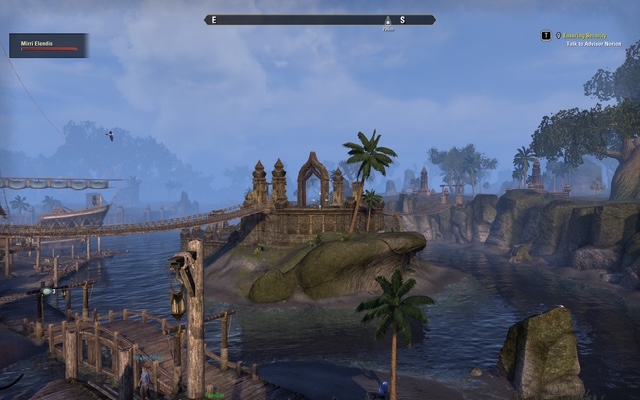
    Khenarthi’s Roost is a place that almost has it all. There are skyshards to collect. There is crafting opportunities in and around Mistral. There is a trainee armor set to collect. There’s fishing opportunities. Should the player choose to go off-script and learn scrying early, there are even ample scrying opportunities. All this is to say, Khenarthi’s Roost offers almost everything a player needs to get started. None of the content is particularly difficult and the region purposefully lacks dungeons or world bosses. This is not a place for the player to die in. It’s a place for them to experiment with different weapons and abilities, and find what works for them. Now, with Update 50, there are difficulty settings and from Challenge difficulty up, it is possible to die, especially when facing the Maormer pirates. However, this also allows the player to experiment with their weapon and abilities of choice and test the limits of their class early on (I wouldn’t say build here as it’s far too early for build testing here). For my current run, this was the place I decided I wanted to try building a Breath Dragonknight just due to how much fun I was having with the Dragonfire ability. I also learned to fish, catching the only rare fish on the island. Here was also where I figured out the basics of crafting through blacksmithing. Nothing complicated yet, but it’s a start. Khenarthi’s Roost was also where my collector’s brain kicked in, looting endless chests just for more trainee armor. Did I get it all? Nah, I can save that for other starting areas, but I like that there are chests scattered about for the option of collecting the full set.

    Conclusion

    So, Khenarthi’s Roost is just the first leg of my journey. My character, Mr. FlamingShrimp now heads to Auridon to deal with greater conspiracies and harder mobs. Once that leg of the journey is finished, another update will be posted as we journey through Elder Scrolls Online.
  • Blending Horror with Reality: A Reanimal Review

    Blending Horror with Reality: A Reanimal Review

    My partner and I slowly wander onto a train, enjoying a moment of reprieve after being chased relentlessly by a creature in a human skin suit. After taking a few minutes to settle down, we inch towards the front of the train and start the engines. For a moment, the train protests in a yearning screech, then it begrudgingly moves forward.

    <CRASH!!>

    The front window of the train smashes open and the grotesque, disjointed skin suit of a man clatters in. My partner and I start running, as fast as our little legs can take us. For a moment, it seems like we might not make it. The creature is gaining momentum fast, but at the last moment, both of us are able to hop out of an open door near the back of the train. The creature, unable to fit through the door, gives up, and begins looking for new ways to gave chase.

    Introduction

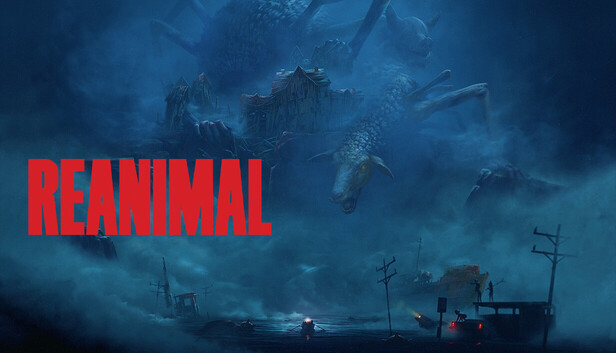
    Reanimal is an adrenaline-fueled horror game developed by Tarsier Studios, the same minds behind the popular, Little Nightmares series. Mirroring Little Nightmares, the game revolves around playing as children, lost amongst a world filled with grotesque creatures and adults, whom are strangely lanky and not quite human-like. Though short, Tarsier Studios succeeds in delivering a compact experience that offers very little downtimes and a lot of nightmares.

    Blending Horror with Environment Storytelling

    (SPOILERS AHEAD)

    First, let’s talk about the storytelling. Reanimal is a game that fully encompasses the saying “Show, don’t tell”. The story is never explicitly provided to the player and must be pieced together from each of the set pieces and monsters we encounter. The game begins on a boat, with one child, a boy, navigating. He soon comes across a girl floating in the water and helps her into the boat. The player soon lands the boats on a sandy shore and are introduced to the first set piece, the outskirts of a seemingly abandoned city. Within the outskirts roams a creature that seemingly wears human skin like a suit, driving an ice cream truck. Throughout the game, there are constant environmental references to real-world traumas. The creature in the skin suit is almost like a representation of adults taking advantage of children. Later set pieces also include a decrepit orphanage, where “dust children” are seemingly loyal to their brood mother, and a war-torn battlefield, where the men have given up and would rather take you down with them, than live another day. It genuinely feels like the world itself is in a depressed state, with entire cities either flooded, cracked from the earth itself, or ravaged by war.

    The constant presence of animals interacting within this environment adds a supernatural layer to the story and of course, gives the game it’s title. The way most of the animals are openly hostile to the children and will contort themselves just to snatch them hints at a problem with the children themselves. It’s almost as if they don’t belong in the world they inhabit. This is further driven home by the girl bringing the sheep into the world, an otherworldly animal that hungers and takes elements of what it consumes. It is almost as if the sheep is cleansing the horrors the world provides, which unfortunately, includes the children themselves.

    The Gameplay

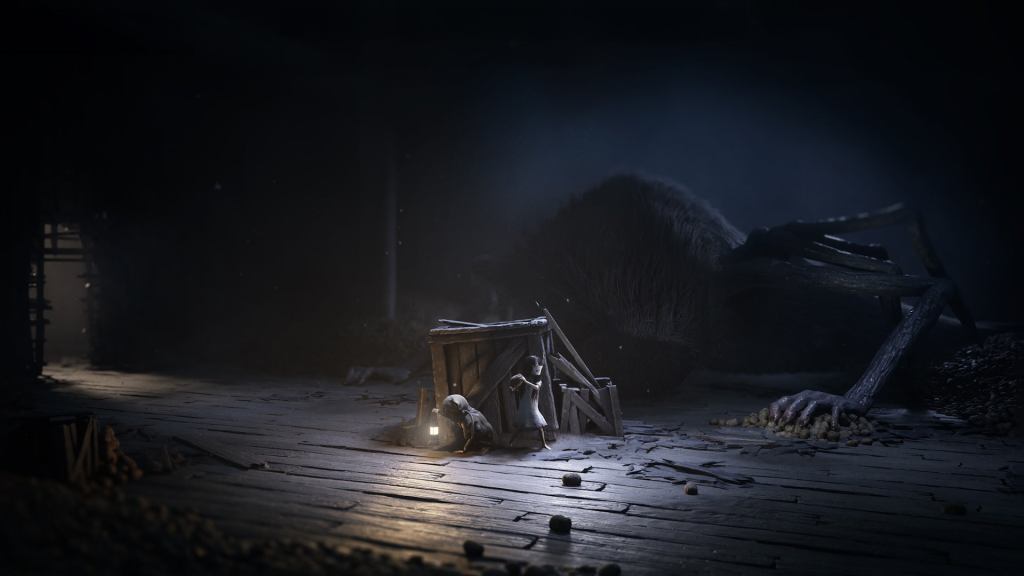
    Against giants, you are largely powerless. The majority of the gameplay involves running and hiding from creatures as well as moments of teamwork between both players. These moments of hiding together, huddled in a corner behind a box, are tense and exciting. The sense of fear and adrenaline carries the player forward. Both children do have melee weapons, and they work quite well against minor enemies like the dust children. Usually, one hit is enough to take them down. Still, against the major enemies, your melee weapons mean nothing.

    That, however, does not mean the children are entirely powerless. At the end of each set piece, there is almost always a boss fight where you take down that which hunts you. Despite the persistence of these giant creatures, they are not that bright and put themselves in a position that allows you to ultimately take them down. These segments are really fun and incredibly exhilarating, often sacrificing the horror built up earlier in favor of offering a moment of vengeance and thrills. Beating a boss and moving on to the next set piece offers a sense of relief that is indescribable. Between my partner and I, these were some of the best moments of the game.

    Conclusion

    Overall, would I recommend this game?

    Absolutely!

    Would I recommend this game given the $40 price tag (just for the standard edition) and the short game time?

    Since it allowed my partner and I a moment to enjoy a game together, yes, but for many others, I would recommend waiting for a sale.

    From start to finish with a good amount of exploration, it took my partner and I roughly 7 hours to beat the game. Admittedly, this is awfully short, but as I described before, it is a compact, non-stop horror adventure that hardly let’s up. Ultimately, it is up to you to decide if you think this game is worth it!

    What do you think? Please let me know in the comments below!

  • Sudden Strike 5 – An Initial Review: An RTS That Almost Delivers

    Sudden Strike 5 – An Initial Review: An RTS That Almost Delivers

    A single Allied soldier inches forward, scouting the town in front of him. As expected, there is a German presence in the town, with multiple men stationed in a building and a machine gun nest nearby. Carefully, a squad of rifleman are moved into position with a team of mortars not far behind. Within seconds, the town is on fire, with explosions ringing left and right from mortar fire. The machine gun nest is taken out with a direct mortar hit and the building is similarly demolished taking out the troops trapped within. The rifleman move in. The town is secure and safety in Allied hands.

    This is the Sudden Strike 5 experience.

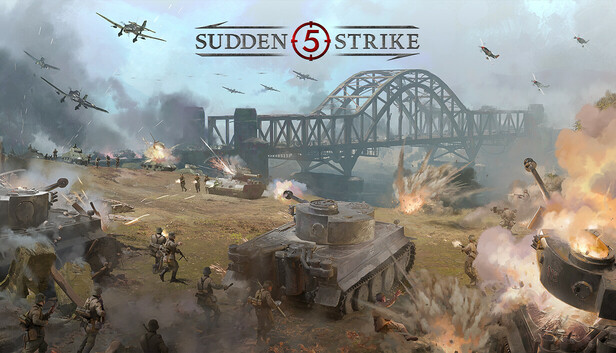
    Sudden Strike 5 is a WWII RTS developed by Kite Games and published by Kalypso Media. For those who are unfamiliar, Sudden Strike is a series that emphasizes the “old-school” Blitzkrieg-style of RTS in which there is generally no base-building and who are forced to work with the units you are given. Sudden Strike 5 in particular, feels closer to the earlier Sudden Strike games (1-3) than it’s direct predecessor, Sudden Strike 4.

    Now, after finishing both of the first German and Allied scenarios (both of which focus on the Battle of Crete) multiple times, on multiple difficulties, and starting a few of the other missions, I can say that my overall opinion of the game is mixed, but optimistic.


    The Positives

    The environments between missions feel different and unique

    Starting with the positives…

    One of the best aspects of the game is the large map sizes, with ample room for maneuverability. This creates a sense of replayability for each mission as you can try different avenues of attack. This is immediately evident in the first mission of the German campaign, where you are given a couple of options as to where to land your paratroopers for the initial attack. You even have the option of ignoring the marked points and landing your paratroopers where you want, albeit on a first playthrough, this is likely a death sentence for your men.

    Another aspect I really love is that armor actually feels useful without being overpowered. In both the Allied and German versions of the Battle of Crete, the Matilda I and II tanks feel powerful and are something to be feared. In the German version of the mission, British Matilda tanks play a vital role in holding back the player’s assaulting forces. As such, you are motivated to prioritize your limited number of heavy bombing runs on the British Matilda’s and are likely to also prioritize capturing anti-tank equipment and empty Matilda. If tanks aren’t available, that’s alright. Infantry is offered a variety of options to take them out such as mortars, anti-tank rifles, or anti-tank grenades. This will however, likely come at the cost of heavy casualties.

    On the other hand, the Allied version of the mission pits you against a largely infantry-based German force. As such, once you have access to the Matilda tanks, you can often roll them right up to the enemy lines and batter them without much consequence, assuming they don’t hammer your tanks with grenades or mortars.

    This leads me to one of the other aspects of the game I enjoy: supplies. Supplies in Sudden Strike 5 are essential. Your tanks and mortars cannot function without them. As such, you are constantly keeping track of how far you are rolling your tanks and how many shots your mortars are firing. If supplies are low, you will likely have to capture one of the optional supply outposts scattered around the map or find a supply truck (that has adequate supplies). Some missions will offer you limited supply drops, which helps with mid-assault refuels and resupply.

    Lastly, let’s talk a little bit about difficulty and the AI. I want to talk about both together as they are related. There are both positive and negative aspects about the AI but in this section, I’ll focus on the positives.

    AI in this game knows when you’ve captured a point or are assaulting a position, and will absolutely send reinforcements from other parts of the map if it feels a certain area is threatened and important. Depending on difficulty, the opposing forces will have more or less units scattered around the map. That means on hard difficulty, you can almost guarantee that any point you’ve captured will likely face a counterattack whereas on normal, it is still likely to happen, but not guaranteed. This has caught me off-guard at times. In multiple instances, I’ve assaulted one position, but suddenly face an infantry counterattack to my flanks, resulting in myself having to divert frontline rifle squads to ensure my artillery in the back are safe.

    P.S. Another quick mention of something I enjoy is the environments between missions. I love the distinct visual differences between the sandy deserts of North Africa, the rocky foothills of Crete, and the snowy plains of Russia.

    In summary, the positives are…

    • Large map sizes allowing for multiple approaches
    • The supply system
    • AI is reactive and will respond to your actions
    • Distinctive environments between mission

    The Negatives

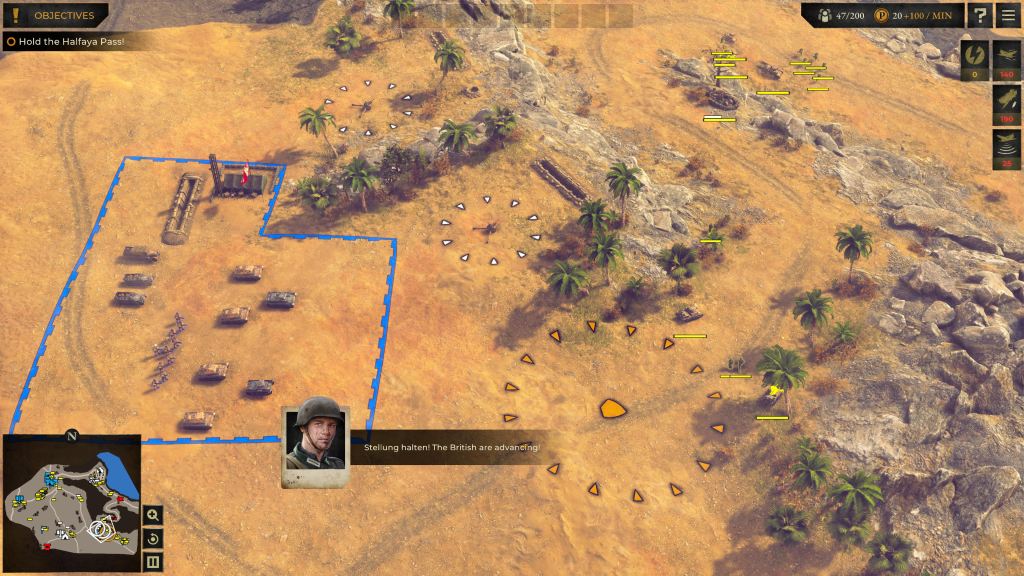
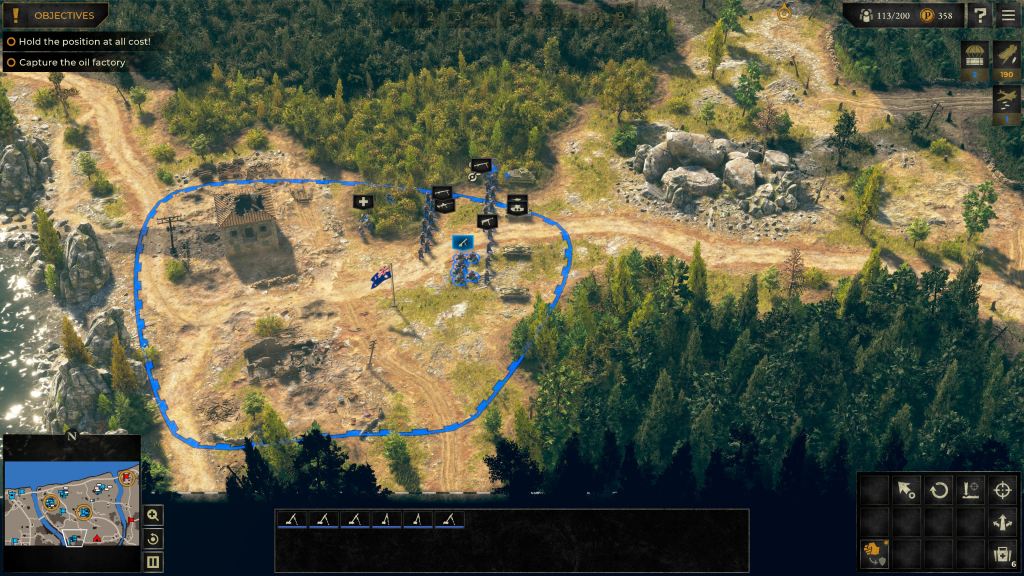
    Tanks + Rifle Squad in the front, Mortars and Medics in the back

    Now, with the positives covered, let’s talk a bit about the negative aspects of the game that I think hold it back.

    First, this game has a problem with repetition. Every mission I’ve played so far primarily involves capturing a series of points that are highlighted in blue. There are optional objectives that generally also involves capturing a series of points. Even defense missions ultimately become offensives and turn into another point capturing game. Now normally, this can actually be fine. The problem is that the current end-of-mission star-based rating system and formula for assault tactics compounds the repetitious feeling.

    In order to get three stars in any mission, you can’t just finish the main and optional objectives. You need to capture EVERY point on the map, essentially clearing out most of the opposing AI. This actually forces a puzzle-like sequence of approach, where while you may have many avenues of attack towards completing the main objectives, to get to three-stars on any mission, you are pigeonholed towards a more optimal route. For example, on my first playthrough of the first mission as the Allies, I took a suboptimal route, resulting in myself taking unnecessary fire while capturing optional objectives and finally having barely enough units to capture the main objectives. All that and I still ended up with two stars because I missed a few “optional” non-objective control points. From that first playthrough, I learned the most optimal route and immediately went for it on my second, resulting in minimal resistance and casualties, while also getting half the clear time and three stars on top of that.

    Now, again, having a puzzle-like sequence of attack towards capturing every single control point can be okay if there is some variation in those assaults. The problem is, there isn’t much variation. The strategy stays consistent for almost every assault on a control point. The recipe for success involves only two types of units: mortars and everything else. Medics are the only other essential utility. Tanks are a nice force multiplier but are not the most precious unit. The most precious are the mortars.

    For every control point, the sequence of attack almost always goes like this.

    1. Send 1-2 units (rifleman, submachine, machinegun – doesn’t matter, their differences are negligible) to scout an enemy control point
    2. Once the scouting units establish line-of-sight, move up a squad of infantry (except mortars and medics) to act as protective cannon fodder. If you have tanks, you can move them up as well.
    3. Now bring up your squad of mortars (the more the better). Almost no units can outmatch their range so you don’t have to worry too much about counterfire. Just protect their flanks.
    4. Now use the mortars to rain hell on every single opposing unit on the control point. The squad in front of the mortars (or tanks) will soak up any counterfire and act as a force multiplier.
    5. Once the control point is cleared, bring up the medics to heal up any casualties.
    6. Rinse and repeat

    Finally, let’s address the negative aspects of the AI, starting with the tactical bomber option. I don’t get the point of it. The tactical bomber is a limited action that calls in a dive bomber to fly around and occasionally bomb tanks and/or military emplacements within an area. The problem is, it often just flies around, not bombing anything, even if there is a clear target. Sometimes, it will look like it is bombing something only for the bombs to fly off-screen and just disappear. This makes the tactical bomber a relatively useless utility.

    Additionally, AI clipping and pathfinding in the game can be problematic. Sometimes, when a unit is downed, a medic will run to the unit, only to be unable to heal him because he’s too close to a rock or wall, essentially clipping through it. Other times, I’ve seen enemy squads stuck against a building wall, barely moving. While that’s advantageous for me, that’s still a noticeable bug.

    In summary, the negatives are…

    • Repetitive mission design
    • Mission rating system forces a certain approach
    • Repetitive tactics reflected in the repetitive mission design
    • AI clipping and pathfinding

    Conclusion

    Overall, this is still a game I will be playing. There is a certain comfort to repetition and I can see myself finishing all the mission in between other games. The core gameplay is fun and the diversity of environments between missions keeps an element of surprise. In fact, I’ll likely be back to leave a new review after beating all the missions.

    I hope this review was constructive and helps you decide if you’d like to give Sudden Strike 5 a shot. Please let me know in the comments!

  • Higurashi – When They Cry: Ch.1 Onikakushi Review

    Higurashi – When They Cry: Ch.1 Onikakushi Review

    Higurashi: When They Cry is a horror visual novel written and produced by 07th Expansion. The full game is split into eight chapters, that are each about 10 hours of gameplay. In this review, I’ll be focusing on Chapter 1: Onikakushi with 100% achievements (which are all easy to get).

    Warning: Spoilers Ahead

    Chapter 1 follows the journey of Keichii, a student from Tokyo who moves to a quiet village called Hinamizawa. At first, the game follows a typical slice-of-life formula, introducing his classmates, all girls, like a typical romance visual novel. Early on, Keichii meets Rena, Satoko, Mion, and Rika. Satoko and Rika are the kids that enjoy messing with the main character. Rena is introduced as a shy, but cute and bubbly girl. Mion is shown as confident and the leader of the pack. All in all, if Higurashi didn’t already have a reputation as a horror visual novel, one could expect Rena or Mion to eventually be a love interest to Keichii.

    In either case, the game takes its time to develop an emotional bond between Keichii and the other characters around him. For those who have previously read slice-of-life VNs, this is familiar territory, but for those looking for a scare, this can feel quite slow. I personally like the amount of time spent in slice-of-life territory. It puts the reader at ease and works to deepen the feelings of unease when the first horror elements are introduced. The first hints of these horror elements arrive when side characters are introduced. Tomitake, the cameraman from Tokyo, is the first to bring up the darker history of Hinamizawa, and what kicks off Keichii’s curiosity into the town’s past. Following the Watanagashi festival, his curiosity is only deepened and turned to fear with the introduction of Ooishi, a cop from Okinomiya. What both Tomitake and Ooishi have in common is their common identity as outsiders, at least in the villagers eyes. Neither are from Hinamizawa, therefore, neither should be there. At least, that is the vibe that is given after the story takes a dark turn….

    I love how the story takes this turn. The common identity between the side characters forces Keichii to reflect on his own identity. He, himself is from Tokyo,therefore he is also an outsider, regardless of whatever acceptance he initially felt. Keichii’s initial experience in Hinamizawa feels like an illusion that was carefully crafted by the village, to relax the prey before the town strikes. As outsiders slowly break Keichii’s illusions, the town begins to look more hideous. As the town itself realizes the gig is up, it turns on Keichii as well.

    Here is where the mystery truly begins. Characters we, along with Keichii have developed a bond with, suddenly began to act strange. Their personalities feel like a switch, going between what we already know and a hidden, murderous side. While Rena and Mion’s personalities initially feels natural, they’re sudden turn toward murderous intent makes the reader seriously question what is happening. Are they possessed? Do they just have some personality disorder that is triggered at specific points? Are they just natural killers pretending to be nice to lure in their prey? The tension is palpable and as the town turns increasely hostile towards Keichii, the reader feel the same fear and confusion as he does. By the time Keichii meets his fate, it almost feels inevitable, with the tension at an all time high. Yet, the reader is only left with more questions than answers. Why is the town like this? Is it supernatural? Is Keichii truly dead?

    Honestly, I can’t wait to pick up the next chapter and see where it goes. I look forward to discovering more about Hinamizawa and what truly drives the town.

    (Achievements Side Note): While you will naturally get most of the achievements just by reading through the story, there are two achievements you might have to go out of the way for. “Detective-Onikakushi” requires that you read all tips that are usually introduced between sub-chapters. If you miss any, make sure to read it after reading the main story. “Onikakushi Party” can be unlocked by attending the “after-party” after reading the main story. Following the main story, an “All-Cast review session” button will appear. After reading through it, you should get the achievement. I highly recommend reading it as it acknowledges many of the readers potential theories after Chapter 1 and proposes some others we might have missed!

    No comments to show.

    Leave a comment