1000% Reviews

Tag: gaming

  • Sudden Strike 5 – An Initial Review: An RTS That Almost Delivers

    Sudden Strike 5 – An Initial Review: An RTS That Almost Delivers

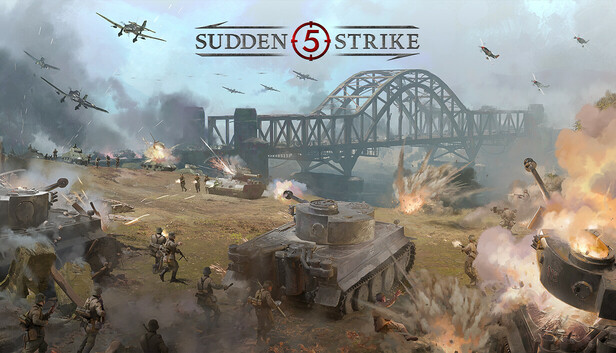
    A single Allied soldier inches forward, scouting the town in front of him. As expected, there is a German presence in the town, with multiple men stationed in a building and a machine gun nest nearby. Carefully, a squad of rifleman are moved into position with a team of mortars not far behind. Within seconds, the town is on fire, with explosions ringing left and right from mortar fire. The machine gun nest is taken out with a direct mortar hit and the building is similarly demolished taking out the troops trapped within. The rifleman move in. The town is secure and safety in Allied hands.

    This is the Sudden Strike 5 experience.

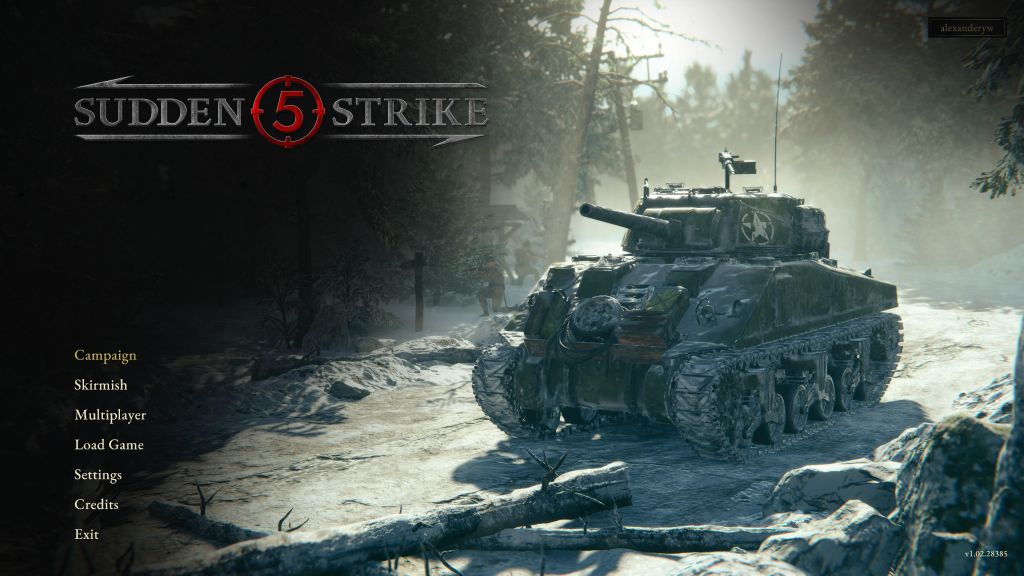
    Sudden Strike 5 is a WWII RTS developed by Kite Games and published by Kalypso Media. For those who are unfamiliar, Sudden Strike is a series that emphasizes the “old-school” Blitzkrieg-style of RTS in which there is generally no base-building and who are forced to work with the units you are given. Sudden Strike 5 in particular, feels closer to the earlier Sudden Strike games (1-3) than it’s direct predecessor, Sudden Strike 4.

    Now, after finishing both of the first German and Allied scenarios (both of which focus on the Battle of Crete) multiple times, on multiple difficulties, and starting a few of the other missions, I can say that my overall opinion of the game is mixed, but optimistic.


    The Positives

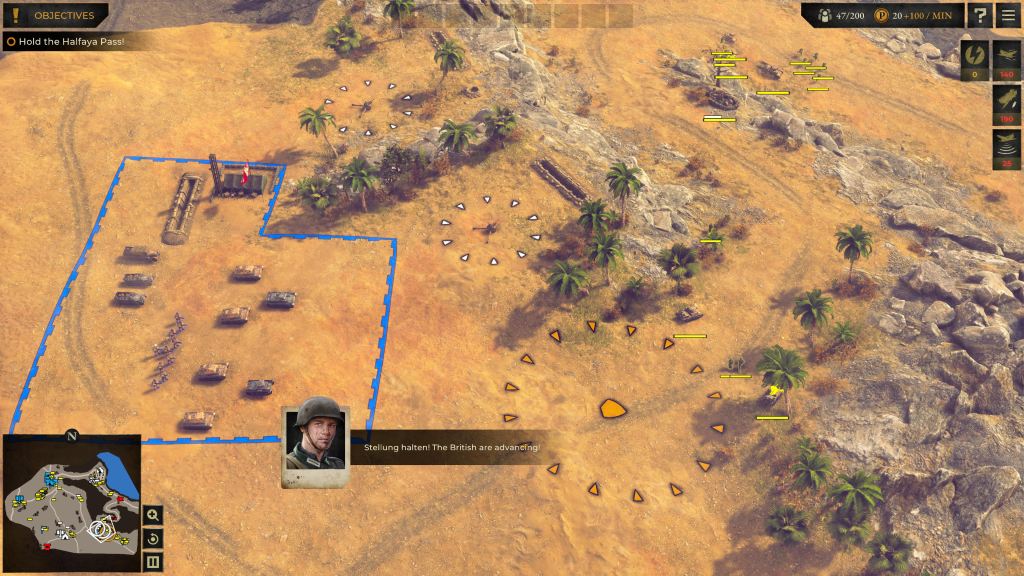
    The environments between missions feel different and unique

    Starting with the positives…

    One of the best aspects of the game is the large map sizes, with ample room for maneuverability. This creates a sense of replayability for each mission as you can try different avenues of attack. This is immediately evident in the first mission of the German campaign, where you are given a couple of options as to where to land your paratroopers for the initial attack. You even have the option of ignoring the marked points and landing your paratroopers where you want, albeit on a first playthrough, this is likely a death sentence for your men.

    Another aspect I really love is that armor actually feels useful without being overpowered. In both the Allied and German versions of the Battle of Crete, the Matilda I and II tanks feel powerful and are something to be feared. In the German version of the mission, British Matilda tanks play a vital role in holding back the player’s assaulting forces. As such, you are motivated to prioritize your limited number of heavy bombing runs on the British Matilda’s and are likely to also prioritize capturing anti-tank equipment and empty Matilda. If tanks aren’t available, that’s alright. Infantry is offered a variety of options to take them out such as mortars, anti-tank rifles, or anti-tank grenades. This will however, likely come at the cost of heavy casualties.

    On the other hand, the Allied version of the mission pits you against a largely infantry-based German force. As such, once you have access to the Matilda tanks, you can often roll them right up to the enemy lines and batter them without much consequence, assuming they don’t hammer your tanks with grenades or mortars.

    This leads me to one of the other aspects of the game I enjoy: supplies. Supplies in Sudden Strike 5 are essential. Your tanks and mortars cannot function without them. As such, you are constantly keeping track of how far you are rolling your tanks and how many shots your mortars are firing. If supplies are low, you will likely have to capture one of the optional supply outposts scattered around the map or find a supply truck (that has adequate supplies). Some missions will offer you limited supply drops, which helps with mid-assault refuels and resupply.

    Lastly, let’s talk a little bit about difficulty and the AI. I want to talk about both together as they are related. There are both positive and negative aspects about the AI but in this section, I’ll focus on the positives.

    AI in this game knows when you’ve captured a point or are assaulting a position, and will absolutely send reinforcements from other parts of the map if it feels a certain area is threatened and important. Depending on difficulty, the opposing forces will have more or less units scattered around the map. That means on hard difficulty, you can almost guarantee that any point you’ve captured will likely face a counterattack whereas on normal, it is still likely to happen, but not guaranteed. This has caught me off-guard at times. In multiple instances, I’ve assaulted one position, but suddenly face an infantry counterattack to my flanks, resulting in myself having to divert frontline rifle squads to ensure my artillery in the back are safe.

    P.S. Another quick mention of something I enjoy is the environments between missions. I love the distinct visual differences between the sandy deserts of North Africa, the rocky foothills of Crete, and the snowy plains of Russia.

    In summary, the positives are…

    • Large map sizes allowing for multiple approaches
    • The supply system
    • AI is reactive and will respond to your actions
    • Distinctive environments between mission

    The Negatives

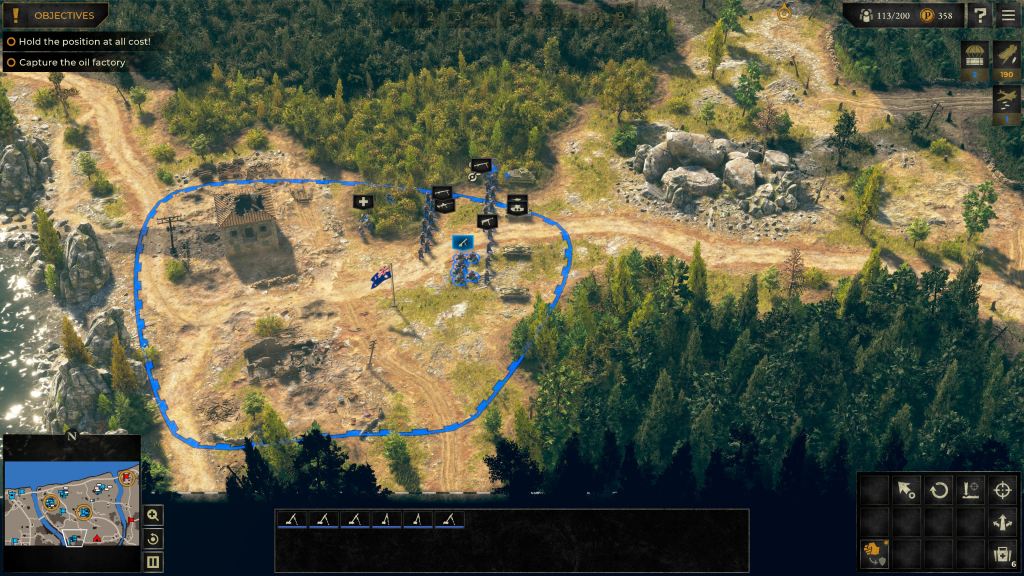
    Tanks + Rifle Squad in the front, Mortars and Medics in the back

    Now, with the positives covered, let’s talk a bit about the negative aspects of the game that I think hold it back.

    First, this game has a problem with repetition. Every mission I’ve played so far primarily involves capturing a series of points that are highlighted in blue. There are optional objectives that generally also involves capturing a series of points. Even defense missions ultimately become offensives and turn into another point capturing game. Now normally, this can actually be fine. The problem is that the current end-of-mission star-based rating system and formula for assault tactics compounds the repetitious feeling.

    In order to get three stars in any mission, you can’t just finish the main and optional objectives. You need to capture EVERY point on the map, essentially clearing out most of the opposing AI. This actually forces a puzzle-like sequence of approach, where while you may have many avenues of attack towards completing the main objectives, to get to three-stars on any mission, you are pigeonholed towards a more optimal route. For example, on my first playthrough of the first mission as the Allies, I took a suboptimal route, resulting in myself taking unnecessary fire while capturing optional objectives and finally having barely enough units to capture the main objectives. All that and I still ended up with two stars because I missed a few “optional” non-objective control points. From that first playthrough, I learned the most optimal route and immediately went for it on my second, resulting in minimal resistance and casualties, while also getting half the clear time and three stars on top of that.

    Now, again, having a puzzle-like sequence of attack towards capturing every single control point can be okay if there is some variation in those assaults. The problem is, there isn’t much variation. The strategy stays consistent for almost every assault on a control point. The recipe for success involves only two types of units: mortars and everything else. Medics are the only other essential utility. Tanks are a nice force multiplier but are not the most precious unit. The most precious are the mortars.

    For every control point, the sequence of attack almost always goes like this.

    1. Send 1-2 units (rifleman, submachine, machinegun – doesn’t matter, their differences are negligible) to scout an enemy control point
    2. Once the scouting units establish line-of-sight, move up a squad of infantry (except mortars and medics) to act as protective cannon fodder. If you have tanks, you can move them up as well.
    3. Now bring up your squad of mortars (the more the better). Almost no units can outmatch their range so you don’t have to worry too much about counterfire. Just protect their flanks.
    4. Now use the mortars to rain hell on every single opposing unit on the control point. The squad in front of the mortars (or tanks) will soak up any counterfire and act as a force multiplier.
    5. Once the control point is cleared, bring up the medics to heal up any casualties.
    6. Rinse and repeat

    Finally, let’s address the negative aspects of the AI, starting with the tactical bomber option. I don’t get the point of it. The tactical bomber is a limited action that calls in a dive bomber to fly around and occasionally bomb tanks and/or military emplacements within an area. The problem is, it often just flies around, not bombing anything, even if there is a clear target. Sometimes, it will look like it is bombing something only for the bombs to fly off-screen and just disappear. This makes the tactical bomber a relatively useless utility.

    Additionally, AI clipping and pathfinding in the game can be problematic. Sometimes, when a unit is downed, a medic will run to the unit, only to be unable to heal him because he’s too close to a rock or wall, essentially clipping through it. Other times, I’ve seen enemy squads stuck against a building wall, barely moving. While that’s advantageous for me, that’s still a noticeable bug.

    In summary, the negatives are…

    • Repetitive mission design
    • Mission rating system forces a certain approach
    • Repetitive tactics reflected in the repetitive mission design
    • AI clipping and pathfinding

    Conclusion

    Overall, this is still a game I will be playing. There is a certain comfort to repetition and I can see myself finishing all the mission in between other games. The core gameplay is fun and the diversity of environments between missions keeps an element of surprise. In fact, I’ll likely be back to leave a new review after beating all the missions.

    I hope this review was constructive and helps you decide if you’d like to give Sudden Strike 5 a shot. Please let me know in the comments!