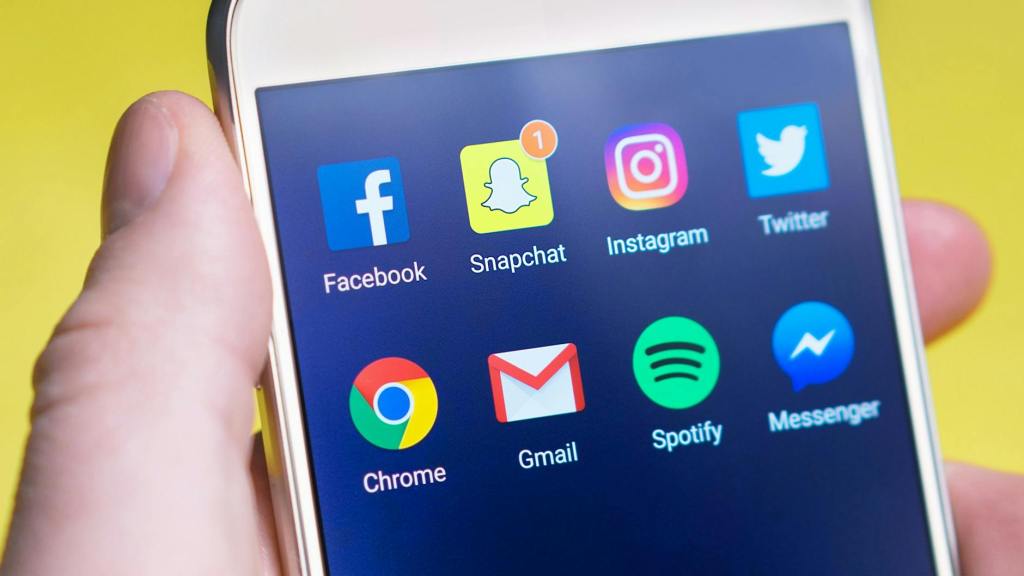
Today, it feels like everything in our modern world is driven by attention. Our computer’s offers endless entertainment just clicks away. Our TV’s always give us something to watch. Our phone’s ensure we never have a break in-between consuming. As coined by Herbert A. Simon, what we are living in, is an attention economy.
Herbert A. Simon was an American Psychologist who coined the term “Attention Economy” in the 1960s to describe the problems of information overload
Now before I dive into my experiences, I want to first break down the term “attention economy”. As the term suggests, attention is a currency that is finite, and therefore, must be traded and earned. For many companies and creators, this currency is incredibly valuable, as it often translates to real income and real currency. Therefore, there is an incentive to absorb as much of people’s attention as possible. The question a company can frame this as is: Since every person experiences 24 hours a day, how much of that can we ensure they stay on our product?
I have always been an active participant in the attention economy. My role, largely as a consumer, has defined much of my life. As a child, I was a voracious reader, always going to the library to find the next story that would spark my imagination. I was also a voracious gamer, getting hooked to video games at an early age, discovering new worlds, interacting with people online, and having fun tinkering with the systems established in the games I played. Now neither of these consumer-based hobbies are particularly bad. In fact, children need to consume in order to learn more about the world around them. Consuming is necessary for encouraging creativity, developing ideas, and shaping an identity. However, at some point during our lives, we expect to balance our consumption with our creative side. We consume to create.
I did not do that. I instead, indulged in excess consumption. I developed a video game addiction early. During my late elementary school and middle school years, I would often stay up late playing Roblox and other games. My parents tried to stop me time and time again, but I’d always find a way to get back to it. This stunted my abilities in school, resulting in lower grades and less time dedicated to actually learning and doing homework.
Now that is not to say that I did not create at all. Outside of school, I played piano and was starting to experiment with writing my own pieces. I was also beginning to learn to code. I mean, if I have a video game addiction, I may as well also learn to make my own games. I had also developed an interest in history, and collaborated with others to start a history club.
All this came to a head in my senior year of high school, when I realized what I was doing to myself. I was lacking sleep every day. My grades were improving to a minor extent, yet I was still stunting myself. I had developed a caffeine dependency that I couldn’t kick. Junior year was when I resolved to be less of a lone introvert and get out there to make friends. Senior year was the year to capitalize on the friend groups I had to get away from the computer. During this time, I had also just gotten my first iPhone. At the time, I was strongly against using social media. I personally felt it was a waste of time and therefore did not participate. In retrospect, this was a smart decision, as it allowed me additional attention to focus on friends, and kick my own video game addiction.
Then, came college. I really appreciate my early years in college, as it was a time where I could truly feel the joy of being a creator. I began making my own covers and music. I also began painting miniatures and learning to mountain bike, yet, this was not to last. During the COVID years, it felt like the attention economy formalized. As people moved online for everything, companies realized the gold mine that was attention.
I was beginning to notice I could never finish any of my creative endeavors. During my Freshman year and before the onset of COVID, I had written two piano covers. When COVID just began, I painted my miniatures, learned to do some metalworking, and mountain biked with buddies when I could. A year into COVID, I was beginning to lose my ability to complete projects. My next piano cover laid half unfinished as I was working on a miniature. My miniature set lay unfinished as I began playing a new video game. My video game lay unbeaten as I realized I hadn’t finished any of my other projects, which resulted in a feeling of guilt that drove me to my phone. Speaking of my phone, during this time, I was driven to use social media to communicate with friends. Not having it would leave me in a communicative black hole. As I began to communicate through social media, I inevitably also began scrolling on social media. Soon, scrolling was my comfort zone to avoid the feelings of guilt of not being to finish anything else…and it was draining.
A wealth of research has now been conducted on the act of “scrolling” through social media, and it has found that for each “short” that we experience, we are giving ourselves small hits of dopamine that eventually exhausts our brain, numbing ourselves from joy while still craving the need for short bursts of dopamine. This results in a feeling of brain fog and fatigue. This feeling is intentional and is the desired outcome of social media algorithms driven by the companies that run them. This numbness and the desire for more short bursts keeps us scrolling and satisfies the company’s desire for attention. The ultimate enemy of these companies is boredom, as boredom allows our brains to rest…and to wander, and wandering is the key to creativity and the ability to create.
Anyways, as COVID leveled off and people went back to school, I returned with a newfound ability to create nothing, and the lack of ability to focus on anything without a deadline. Thankfully, school is a process in which you are constrained by deadlines. School, and later, part-time work and a relationship became the only structure I had. With the new income, I also began developing a new coping mechanism: buying games that I know I will never finish.
After I graduated college, my part-time work became full-time and now, besides maintaining my relationship, I had an entire evening to myself. Free-time became my greatest enemy. I had so many ideas as to how to use my free-time, yet I couldn’t focus on any of it. I began this blog (along with two other blogs), yet couldn’t follow through with updating any of them consistently. In fact, I kept changing the focus of the blogs, renaming them with new themes constantly. I began and dropped hobbies on the drop of a hat. During this time, I began therapy and also got myself checked for ADHD. I was soon diagnosed with ADHD, inattentive type. I have since not followed through with it. All this resulted in an even further withdrawal into my phone and a growing games backlog.
The only time I felt a modicum of freedom in my own mind (outside of work) was on my long drives to visit my parents. As I’ve stated before, boredom is the key to creating and the enemy to the attention economy. During these drives, I often put on an audiobook, or podcast, or just music, yet always, my mind will begin to wander. I’d come up with altruistic and grandiose ideas, motivating thoughts, and project concepts that could change my life, and maybe even the world.
But then, I arrive at my destination.
And all those ideas fade into the background as reality pushes back in, and all the attention-seeking mechanisms flood back, crashing on my mind like an unending tidal wave.
And soon, I feel the guilt of not acting and am drawn back to the phone, coping in what way I can.
…
…
…
But there is a light at the end of the tunnel. For one, I am aware of the history of my problems. Once, I had an addiction to video games. Now, I crave the day I can focus on one and finish it. Once, I felt joy from consuming media. Now, consuming media feels numb and like a checklist. When I look back on my successes and my failures, one thing I know for sure, is I have the ability to kick my bad habits. Previously, I had identified that as videos games. Now, I know it is social media and my phone. One step at a time, I work everyday to withdraw from my phone. I am learning to enjoy movies again. I am learning to enjoy reading again. I am learning to play video games again as a medium for joy instead of as a coping mechanism, and from this, I am learning how to balance being a consumer with being a creator again.
This blog is a first step. I have a huge backlog of books and games. What if I were to turn these books and games into a medium for creation rather than for pure consumption? What if I were to practice consistency instead of drowning in the guilt of not finishing anything? This blog is a simple first step towards making creation feel fun instead of like additional work, and therefore something to be avoided.
My vow is to be able to maintain this blog consistently and start creating again.
I dream to one day be able to create stories, and drive creation in meaningful ways, perhaps through Youtube, or through a novel, yet I know it will only hurt me to dream too big too fast, so, this blog is a starting point. A vow…in which I will do my best to keep to it.
 1000% Reviews